
best time for a Tanzania photography safari

best time for a Tanzania photography safari

Month-by-Month Guide to the Best Time for a Tanzania Photography Safari

Tanzania is one of the most rewarding places in Africa for wildlife photography, but there is no single month that is perfect for every photographer. The best time for a Tanzania photography safari depends on the kind of images you want to create.

Some travelers come for the drama of the Great Migration. Others want newborn wildlife and predator action in Ndutu. Some are drawn to elephant herds beneath baobab trees in Tarangire, while others prefer quieter months with lush landscapes, moody skies, and fewer vehicles in the field. Tanzania offers all of these, but not at the same time, If you are planning a private Tanzania photography safari, the smartest approach is not simply asking, “When is the best time to go?” It is asking, “What do I want to photograph, and under what conditions?”

The short answer

For classic wildlife photography, the dry season from June to October is usually the strongest overall window. During these months, vegetation is thinner, animals gather more predictably around water, and general game viewing is often easier and cleaner to photograph.

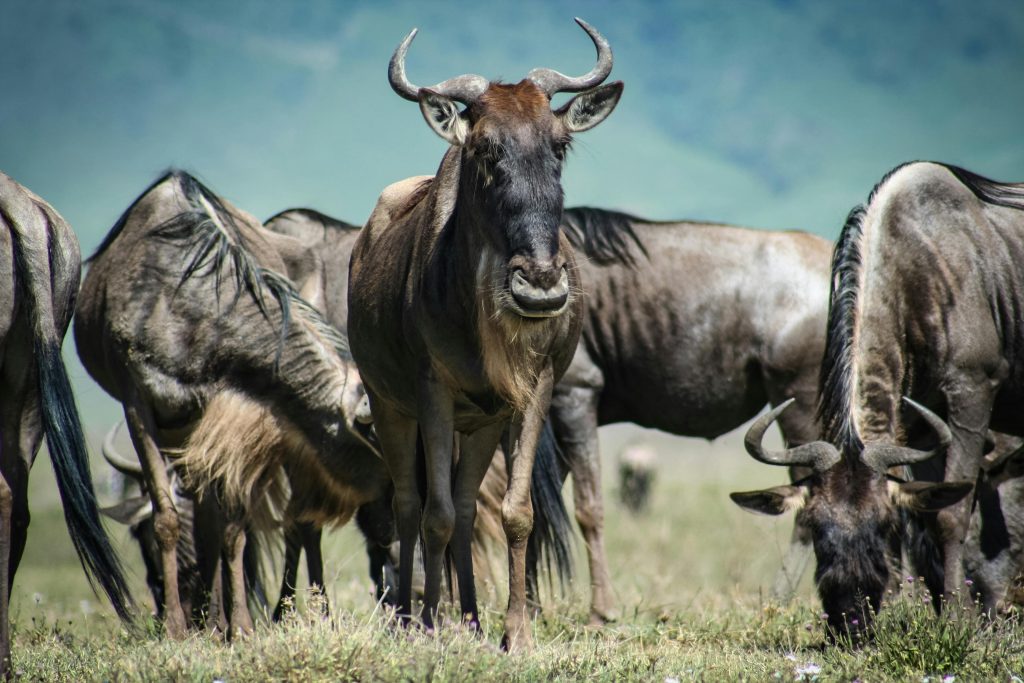
For calving season photography, especially if you want newborn wildebeest, predator-prey interaction, and dramatic storytelling scenes, January to March is one of the best periods, especially in the Ndutu and southern Serengeti area. February is often considered a peak month for births.

For river crossing photography, the most sought-after period is generally July to October, when the migration moves north and the herds may cross the Mara River, depending on rainfall and movement patterns.

Best time by photography goal

For the Great Migration

If your dream is to photograph the migration, timing matters a lot because the herds move through different parts of the Serengeti ecosystem across the year.

  • January to March: southern Serengeti and Ndutu, with calving season and active predators
  • April to June: central Serengeti transition period, with herd movement and rutting activity
  • June to July: western corridor and Grumeti region
  • August to October: northern Serengeti, where river crossing opportunities are strongest
  • November to December: movement begins shifting south again depending on rains and grazing conditions

For photographers, this means the “best” time depends on whether you want calving scenes, herd movement, rutting behavior, or river crossings.

For big cat photography

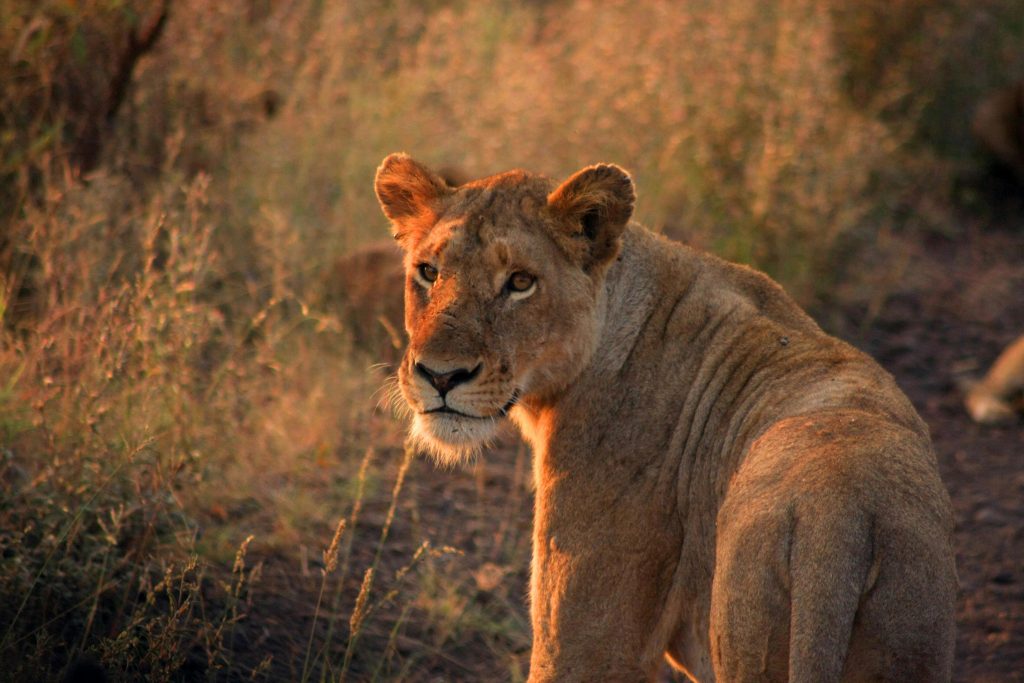
Big cats can be photographed year-round in Tanzania, but some periods are especially rewarding. The calving season in Ndutu from late January through early March can be exceptional because predator activity often increases around the large concentration of wildebeest and newborn calves.

The dry season from June to October is also very strong for predators in the Serengeti, especially when visibility is better and wildlife is easier to follow in thinner grass.

For elephant and landscape photography

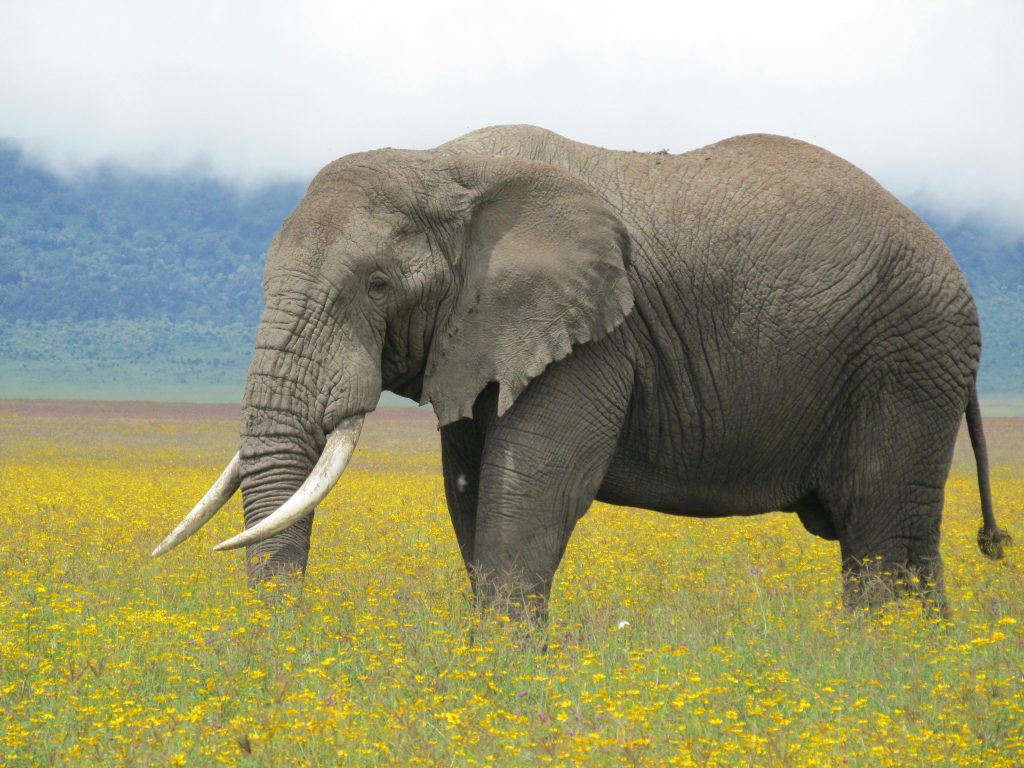
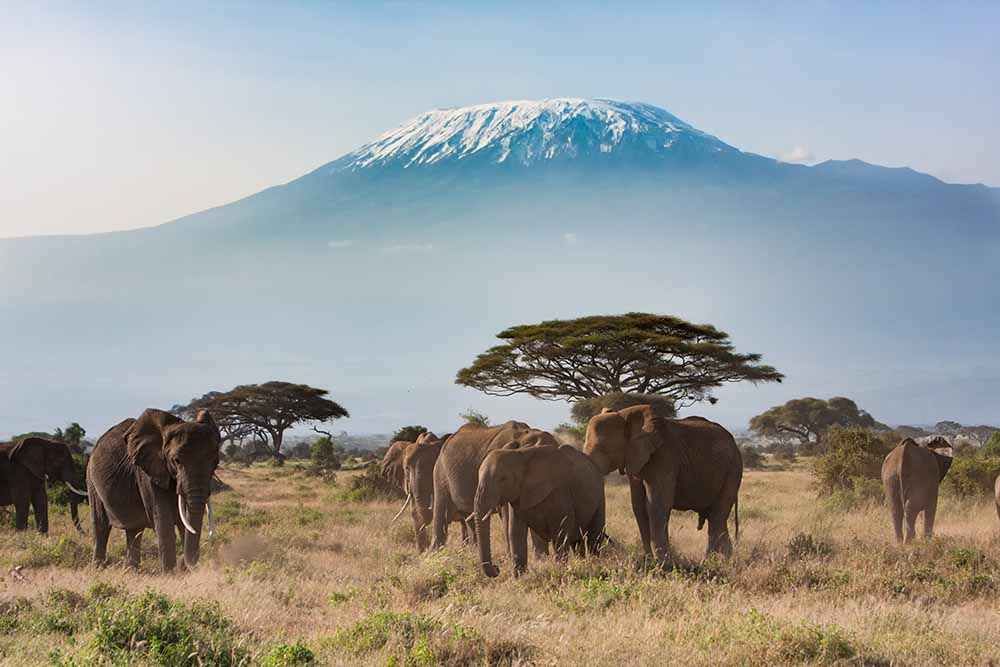
If you love elephants, baobabs, dust, and warm evening light, Tarangire is particularly rewarding during the dry season, when wildlife gathers more predictably and conditions are often cleaner for photography. More broadly, June through October is usually one of the best periods for classic dry-season imagery across northern Tanzania.

For birdlife and lush scenery

If your style leans toward atmosphere, birds, and greener landscapes, the green season can be beautiful. While this period brings more rain, it also offers richer color, dramatic skies, and a softer landscape palette. Birdlife is often especially rewarding at this time, and some travelers also enjoy the lower crowd levels and lower rates during the long-rain season.

Month-by-month photography overview

January

A beautiful time for southern Serengeti and Ndutu. The landscape is still green, and calving season is beginning or underway. Excellent for newborn wildlife, soft scenery, and predator action.

February

One of the strongest months for wildlife photography in Ndutu. Thousands of calves may be born during this period, and predator activity is often intense. For many photographers, this is one of the best months of the year.

March

Still strong for calving season in parts of the south, though rains may begin to increase. Can be excellent for photographers who want drama, mood, and fewer crowds.

April and May

These are long-rain months, so travel can be more weather-dependent. However, central Serengeti can still be rewarding, and this period can offer lower prices, fewer vehicles, and rich green landscapes for photographers who do not mind the rain.

June

The dry season begins strengthening. Wildlife becomes easier to photograph in many areas, and the migration starts moving westward and northward. This is a strong month for photographers who want fewer crowds than peak season but improving conditions.

July to September

These are classic safari months in Tanzania. Conditions are dry, visibility is strong, and the northern Serengeti becomes especially attractive for migration photographers hoping for river crossing opportunities. Crowds also rise during this period, especially in well-known migration areas.

October

Still strong for dry-season wildlife photography, with continued migration opportunities in the north depending on rainfall and herd movement. Light can be beautiful, and general game viewing remains excellent.

November

A transition month. Some rains may return, and migration patterns begin shifting again. This can be a quieter time in some areas, which appeals to photographers who want a less crowded experience.

December

The green season begins building again, and southern movement becomes more relevant. This can be a lovely time for photographers wanting fresh landscapes, early calving buildup, and a different mood from the classic dusty dry season.

So, when should you go?

If you want the safest all-round answer, go between June and October for classic wildlife photography. If you want the most dramatic predator-and-newborn storytelling, aim for January to March, especially around Ndutu. If your dream is the iconic river crossing image, target July to October and build the itinerary around northern Serengeti.

The truth is that Tanzania rewards photographers all year — but each season tells a different story.

Final advice

The best time for a Tanzania photography safari is not the same for everyone. The strongest trip is the one built around your subject, your style, and your creative goal.

If you want help choosing the right season, route, and park combination, explore our Private Tanzania Photography Safaris or contact us for a custom itinerary built around the kind of images you want to create.
Useful Information

Photography Workshop Safaris in Tanzania

Photography Workshop Safaris in Tanzania

Learn, Create, and Capture More on a Tanzania Photography Workshop Safari

A photography workshop safari in Tanzania is one of the best ways to improve your wildlife photography while experiencing some of Africa’s most extraordinary landscapes and wildlife encounters.

Designed for photographers of all levels, our workshop safaris combine expert guidance, small-group travel, and immersive time in the field to help you create stronger images with more confidence. Whether you are just beginning your wildlife photography journey or already building a serious portfolio, these safaris give you the opportunity to learn in real conditions while photographing Tanzania’s iconic wildlife.

Our workshop safaris are led by accomplished photographers and supported by some of our most experienced Tanzanian safari guides, creating a unique balance between photographic instruction and expert wildlife tracking. This means you are not only taken to the right places at the right time, but also supported in how to approach light, composition, behavior, timing, and storytelling in the field.

A Small-Group Safari Designed for Photographers

Unlike a standard safari, a workshop photography safari is built entirely around the needs of photographers. Group sizes are kept intentionally small, with only a limited number of photographers per vehicle—usually no more than three—so that every guest has enough room for gear, clean shooting angles, and the freedom to work without feeling crowded or rushed.

This setup allows for:

  • more space for camera equipment
  • access to multiple shooting angles
  • a quieter, more focused field experience
  • more time for observation and image-making
  • direct support from the workshop leader

The result is a safari that feels more intentional, more creative, and far more rewarding for anyone serious about photography.

Learn in the Field, Not Just in Theory

Our workshop safaris are led by professional photographers who travel with you throughout the journey and are available to guide you in all aspects of image creation, Depending on the workshop leader and itinerary, guidance may include:

  • camera settings in changing light
  • wildlife composition
  • working with behavior and movement
  • exposure techniques in difficult conditions
  • storytelling through sequences and scene-building
  • making the most of golden hour
  • building stronger wildlife portfolios

Some workshop safaris include more formal instruction, while others focus on practical field guidance and one-on-one support. In all cases, the experience is designed to help you grow as a photographer while still enjoying the excitement and beauty of safari.

Guided by Photography-Aware Safari Experts

A successful workshop safari depends on more than photography knowledge alone. It also depends on exceptional guiding in the field.

That is why our workshop safaris combine experienced photographer leaders with highly skilled Tanzanian safari guides who understand wildlife movement, habitat, light direction, and vehicle positioning. This collaboration is what gives guests the best possible opportunity to be in the right place at the right time, For photographers, that makes a major difference.

Excellent Value for Serious Travelers

All photography workshop safaris are offered as package-priced experiences, giving strong value to travelers who want to make the most of their time in Tanzania, By combining expert leadership, carefully planned itineraries, small-group vehicle setups, and photography-focused field time, these safaris offer far more than a standard wildlife holiday. They are designed for travelers who want a deeper, more productive, and more inspiring photographic experience.

Who These Safaris Are Best For

Our Tanzania photography workshop safaris are ideal for:

  • beginner photographers who want to improve quickly
  • hobbyists who want expert field guidance
  • advanced photographers building stronger portfolios
  • wildlife and landscape photographers
  • photographers who prefer small groups and focused shooting time
  • travelers who want both learning and adventure in one experience

Start Your Photography Workshop Safari in Tanzania

If you want more than a standard safari and are looking for a photography journey built around learning, creativity, and strong wildlife encounters, our Tanzania photography workshop safaris offer an exceptional way to experience the wild.

Explore our upcoming workshop departures or contact us to find the right photography safari for your level, interests, and creative goals.

Our Photography Safaris

A day on a Tanzania photography safari

A day on a Tanzania photography safari

What a Day on a Tanzania Photography Safari Looks Like

A photography safari in Tanzania is very different from a standard safari. It is not about rushing from one sighting to the next. It is about working with light, timing, wildlife behavior, and patience to create stronger images in the field.

Each day is carefully shaped around the best times for photography — usually early morning and late afternoon, when wildlife is active and the light is soft, warm, and dramatic. The exact rhythm may vary depending on the park, season, and sightings, but most game drives last around 3 to 4 hours at a time, If you are planning a private Tanzania photography safari, here is what a typical day may look like.

Early Morning: The Best Light Begins Before Sunrise

A day on photography safari usually starts early, often around 5:30 am. This is one of the most important parts of the day, as the first light often produces the most beautiful wildlife photography conditions.

It helps to prepare everything the night before — camera batteries charged, lenses ready, memory cards cleared, clothing laid out, and your bag packed. Early mornings move quickly, and being ready makes a big difference.

Guests usually gather in the main lodge area shortly after waking, where tea, coffee, and light snacks are served before departure. Then it is time to head into the bush.

Morning game drives are often focused on:

  • predator activity before the heat rises
  • soft golden light
  • atmospheric landscapes
  • birds and wildlife at their most active
  • cleaner, calmer photographic conditions

After around three hours in the field, you typically return to camp or lodge for a proper breakfast.

Midday: Rest, Review, and Reset

The middle of the day is usually quieter in terms of photography. The light becomes harsh, temperatures rise, and many animals rest in the shade. This is why midday is often the perfect time to slow down.

Depending on the lodge and itinerary, this part of the day can be used for:

  • reviewing and editing your images
  • cleaning lenses and preparing gear
  • recharging batteries and devices
  • resting between drives
  • enjoying lunch at camp
  • taking in the surroundings at a slower pace

Some lodges also offer optional activities such as a guided walking safari with a ranger. These walks can give you a completely different perspective on the bush, focusing on smaller details such as plants, insects, tracks, and animal spoor. For photographers, this can add depth to the safari experience, especially if you enjoy storytelling and environmental detail.

If your lodge has a spa, pool, or beautiful viewing area, midday is also a great time to relax and recharge before the next session.

Afternoon: Golden Light and Longer Shadows

By mid to late afternoon, the light softens again and it is time to head back into the field. Afternoon game drives often begin around 3:30 pm, depending on the season and location.

This is one of the most rewarding times of day for photography. The light becomes warmer, shadows stretch across the landscape, and animals begin to move again.

Afternoon photography often focuses on:

  • warm directional light
  • backlit subjects
  • silhouettes
  • wildlife in motion
  • elephants, giraffes, and plains game in golden grass
  • sunset landscapes and storytelling scenes

As the sun begins to drop, many safaris pause for a short sundowner break. There is something unforgettable about watching the sun set over the African savannah after a strong afternoon in the field.

In many parks, game drives end at sunset because night drives are not always permitted. If night photography or nocturnal wildlife is important to you, it is worth checking in advance whether your itinerary includes a lodge or conservancy where night drives are allowed.

Evening: Dinner, Campfire, and Preparing for the Next Day

Most guests return to camp around 7:00 pm, depending on park rules and drive timing. There is usually time to freshen up before dinner.

Evenings on safari are often relaxed and memorable. Dinner is followed by quiet conversation, storytelling around the campfire, and discussion of the day’s sightings and images. It is also the right time to prepare for the next morning — charging batteries, backing up files, checking gear, and getting a little rest before the next early start, Photography safari days can be full, but they are also deeply rewarding. The rhythm becomes part of the experience.

Why This Safari Rhythm Matters for Photography

This daily rhythm is not accidental. It is designed around what matters most in wildlife photography:

  • the best light
  • the best animal activity
  • enough time to react to behavior
  • space to review and reset between sessions

That is why a photography safari feels so different from a normal game drive. It gives you time not only to see wildlife, but to work with the moment properly.

Final Thoughts

A day on a Tanzania photography safari is built around intention. You rise early, work with the light, stay patient in the field, and return with more than sightings — you return with opportunities to create meaningful images, For photographers, that rhythm is part of the magic.

If you are looking for a safari designed around light, timing, and wildlife photography, explore our Private Tanzania Photography Safaris and discover itineraries built for stronger images and more rewarding time in the field.

Our Tanzania Photography Safaris Packages

Tanzania Photography Safari Guide

Tanzania Photography Safari Guide

What You Need to Know Before Booking a Tanzania Photography Safari

Tanzania is one of the most rewarding destinations in Africa for wildlife and landscape photography. From the endless plains of the Serengeti to the elephant-rich baobab country of Tarangire, from the dramatic rim of the Ngorongoro Crater to the remote wilderness of Ruaha, Tanzania gives photographers an extraordinary mix of wildlife, scenery, light, and atmosphere.

But a great Tanzania photography safari is not just about choosing the right parks. It is also about understanding the seasons, knowing what equipment to bring, choosing the right safari style, and giving yourself the time and conditions needed to create strong images.

If you are planning a private Tanzania photography safari, here is what you should know before you go.

Why Tanzania Is One of Africa’s Best Photography Safari Destinations

Tanzania is a world-class destination for photographers because it offers both iconic wildlife regions and lesser-visited wilderness areas in one country. In the north, photographers can explore the Serengeti, Tarangire, Lake Manyara, Ngorongoro, and Mount Kilimanjaro. In other parts of the country, remote parks such as Ruaha, Katavi, Mahale, and Gombe offer a wilder, quieter, and more exclusive experience.

What makes Tanzania so special is the variety. On a single journey, you may photograph:

  • great migration herds crossing open plains
  • elephants beneath ancient baobabs
  • predators in golden grass
  • flamingos on shallow alkaline lakes
  • dramatic crater landscapes
  • remote wilderness with very few vehicles
  • cultural moments and environmental portraits

For photographers, this diversity makes Tanzania one of the most exciting safari destinations in Africa.

photo

What Makes a Photography Safari Different from a Normal Safari

A normal safari is often built around seeing as much wildlife as possible. A photography safari is built differently. It is designed around light, timing, wildlife behavior, patience, and positioning.

That means a good photography safari usually includes:

  • more time at sightings
  • flexible schedules based on wildlife movement
  • sunrise and sunset game drives
  • guides who understand how photographers work
  • fewer people in the vehicle
  • more thought given to background, angle, and light direction

If your goal is not just to see animals, but to come home with meaningful images, this difference matters.

The Best Places in Tanzania for Photography Safaris

Serengeti National Park

The Serengeti is the heart of wildlife photography in Tanzania. It is famous for the Great Migration, predator action, open landscapes, and year-round game viewing. For many photographers, this is the main reason to visit Tanzania.

Ngorongoro Crater

Ngorongoro offers high wildlife density in a dramatic natural setting. It is one of the few places where photographers may capture several major species in a single day, often against striking crater backdrops.

Tarangire National Park

Tarangire is especially rewarding for elephant photography, baobab compositions, warm dust, and beautiful light. It often feels quieter and more intimate than some of the more famous parks.

Lake Manyara National Park

Lake Manyara is a strong choice for birdlife, forest-edge photography, reflections, and lush green scenery. It can add variety and texture to a broader northern circuit photography safari.

Ndutu Region

Ndutu is one of the best places in Tanzania for calving season photography. From December to March, the area attracts wildebeest herds, newborns, and the predators that follow them. For action and storytelling, this can be one of the most exciting times of year.

Remote Tanzania

If you want a more exclusive experience, parks such as Ruaha, Katavi, Mahale, and western Tanzania offer quieter wilderness, fewer vehicles, and cleaner compositions. These places are ideal for travelers who want something beyond the classic northern circuit.

safari photo

Best Time to Go on a Tanzania Photography Safari

The best time depends on the type of photography you want to focus on.

  • December to March: ideal for Ndutu calving season, newborn wildlife, and predator action
  • June to October: excellent for dry-season wildlife viewing and cleaner photography conditions
  • July to October: strong period for northern Serengeti migration movement and river crossing areas
  • Green season: rich colors, dramatic skies, softer landscapes, and fewer vehicles in some areas

Instead of asking only when wildlife is best, ask when the kind of photography you want is best.

What Camera Gear Should You Bring?

One of the most common mistakes on safari is bringing too much equipment. In wildlife photography, moments happen quickly. Too many choices can slow you down.

A practical safari setup often includes:

  • one main camera body with a long lens
  • a second body with a shorter zoom
  • extra batteries and memory cards
  • a beanbag or vehicle support
  • dust protection
  • charging accessories and plug adapters

You do not need to carry everything. What matters most is being ready when the moment appears.

A Simple Gear Mindset

A simpler setup helps you react faster. On safari, hesitation can mean missing a behavior shot, a head turn, or the best light. The best gear is the gear you can access quickly and use confidently.

Why Accommodation Matters More Than You Think

On a photography safari, accommodation is not only about comfort. It also affects how quickly you can reach wildlife areas, how easily you can charge your gear, and how much time you lose between drives.

The best camps and lodges for photography safaris usually offer:

  • strong location close to wildlife areas
  • enough charging support for camera equipment
  • early access to the field
  • comfortable rest between drives
  • reliable meals and service

A well-located camp often means more time photographing and less time in transit.

photography

Think Beyond Record Shots

One of the biggest changes photographers experience on safari is learning to move beyond simple record shots.

Instead of only asking:

  • Did I photograph a lion?
  • Did I see a cheetah?
  • Did I get a zebra?

Ask:

  • Did I photograph behavior?
  • Did I capture interaction?
  • Is there a story in this frame?
  • Is the light working for me?
  • Does the image feel alive?

The most memorable safari images are often the ones that show mood, movement, relationships, or tension — not just proof that the animal was there.


Wildlife Expectations: Keep an Open Mind

Tanzania’s parks are not zoos. There is never a guarantee that you will see a specific animal on a specific day. That is part of what makes the experience real.

The best way to enjoy a Tanzania photography safari is to arrive with an open mind, clear priorities, and a guide who understands seasonality, location, and behavior. A strong guide can increase your chances dramatically, but wildlife always remains wild.


Is a Tanzania Photography Safari Right for You?

A Tanzania photography safari can work well for:

  • beginner photographers
  • serious hobbyists
  • professional wildlife photographers
  • couples who want a slower, more focused safari
  • content creators and storytellers
  • non-photographers who simply love wildlife and nature

You do not need to be an expert to enjoy it. You just need curiosity, patience, and a desire to experience Tanzania in a deeper way.


Final Advice Before You Book

Enjoy the experience. Let the safari come to you. Stay ready, but do not rush. Some of the strongest safari photographs happen when you slow down, observe carefully, and trust the rhythm of the wild.

Tanzania rewards patience. The light changes, the landscape opens, and suddenly the image you hoped for is right in front of you.

If you want a photography safari that gives you more than a standard game drive, choose an experience built around time, light, behavior, and flexibility.

Great Migration photography guide

Great Migration photography guide

A Month-by-Month Guide to Photographing the Great Migration

The Great Migration is one of the most extraordinary wildlife spectacles on Earth, but for photographers, it is much more than a single event. It is a moving story that changes throughout the year — from newborn calves on the southern plains to vast columns of wildebeest stretching across the Serengeti, to the drama of river crossings in the north. Because the herds move with rainfall and grazing, there is no single month that is best for every kind of image. The strongest Great Migration photography safari is the one built around the exact scenes you want to capture.

For some photographers, the goal is predator action during the calving season. For others, it is the scale and movement of the herds, or the tension and chaos of a river crossing. Tanzania gives you the chance to photograph all of these, but not in the same place at the same time. That is why planning matters so much.

Why the Great Migration Is So Special for Photographers

What makes the Great Migration so remarkable is its variety. It is not only about numbers, although the scale is extraordinary. It is also about behavior, seasonality, and atmosphere. Depending on where and when you travel, you may photograph:

  • newborn wildebeest on the southern plains
  • predators following calving herds
  • long columns of animals moving across open savannah
  • rutting and territorial behavior
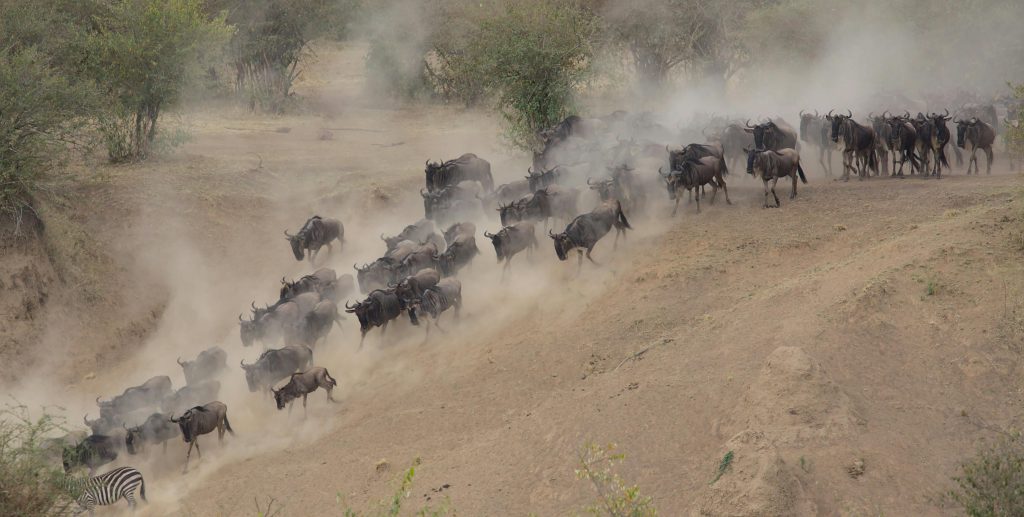
  • dust, motion, and layered compositions
  • river crossings with crocodiles and confusion at the banks

For photographers, this means the Great Migration is not one safari — it is several different photographic experiences within one annual cycle.

Understanding the Migration: Month by Month

January to March: Southern Serengeti and Ndutu Calving Season

This is one of the most powerful times of year for wildlife photography in Tanzania. The herds gather on the short-grass plains of the southern Serengeti and Ndutu, where nutritious grazing supports the calving season. January is already strong, and February is often considered one of the peak months for births. This period is especially rewarding for photographers interested in newborns, mothers and calves, predator-prey interaction, and emotionally rich storytelling images.

Photographically, this season offers:

  • young animals and family interaction
  • active predators such as lions, cheetahs, and hyenas
  • green landscapes and fresh seasonal light
  • more narrative, intimate wildlife scenes

April to June: Herd Movement and Transition

As the rains shift, the herds begin moving west and north through the Serengeti ecosystem. This is a transitional period and can be excellent for photographers who enjoy movement, dust, changing landscapes, and fewer crowds in some areas. Early June is also noted as a strong shoulder period for Grumeti and western corridor experiences.

This phase works well for:

  • wide-angle migration scenes
  • movement across open country
  • dust and backlit photography
  • more atmospheric and less crowded experiences in the right weeks

June to July: Western Corridor and Grumeti Region

June and July are often highlighted as one of the best times to see the migration in the western corridor. This is a strong period for herd movement and for photographers who want migration scenes before the peak northern crowds arrive. Safari sources consistently point to June and July as the key time for the western Serengeti experience.

August to October: Northern Serengeti and River Crossings

For many travelers, this is the classic Great Migration dream. August and September are especially known for the northern Serengeti and Mara River crossing season, with continued possibilities into October depending on rainfall and herd movement. These crossings are dramatic and unpredictable, which is exactly what makes them so compelling — and so difficult — to photograph.

This is the best period if your photographic goal is:

  • river crossing drama
  • herd pressure at the riverbanks
  • crocodile danger and panic scenes
  • iconic migration imagery in dry-season light

November to December: The Shift South Begins Again

As the cycle continues, the herds begin shifting back toward the southern plains, depending on rain and grazing conditions. This is often a quieter, more transitional period, but it can be very rewarding for photographers who want lower crowd levels, changing weather, and the start of a new seasonal story.

What Kind of Great Migration Images Do You Want?

One of the biggest planning mistakes is choosing a migration safari without deciding what kind of images you actually want. Different seasons produce very different portfolios.

If you want calving and predator action

Choose January to March, especially Ndutu and southern Serengeti. This is best for photographers who want emotion, predator pressure, mothers with calves, and storytelling.

If you want scale and movement

Choose the transitional months through central and western Serengeti, especially April to June and early July. This is strong for herd patterns, motion, dust, and broad landscape compositions.

If you want river crossing drama

Choose August to October in northern Serengeti. This is the most iconic migration period, but also one of the busiest, so planning and camp positioning matter a lot.

Photography Tips for the Great Migration

A successful Great Migration safari is not only about being there at the right time. It is also about approaching the experience like a photographer, not just a spectator.

Be patient

Migration photography often rewards waiting. Herds may gather at a river for hours before crossing. Predators may lie still for long periods before moving. The strongest images often come after patience, not rushing.

Think beyond the obvious

Not every strong migration image has to be a crossing. Some of the most memorable frames come from:

  • mothers and calves
  • lines of wildebeest disappearing into the distance
  • dust clouds lit by the sun
  • interaction between species
  • tension before movement begins

Work with light

Early morning and late afternoon are critical. River crossings and migration movement can happen at any time, but the best overall photography conditions are still the classic golden-hour windows whenever possible.

Stay in the right region

Because the migration moves, camp location matters. A well-positioned camp can save hours of driving and give you more productive field time. Some operators and camps shift seasonally for this reason.

How to Avoid Crowds and Still Get Strong Images

One of the main challenges of migration photography is crowding, especially in famous northern crossing areas and in central Serengeti at peak times. Reliable safari sources specifically note that the Seronera area can be crowded and that the Mara River becomes busy during crossing season.

If you want cleaner images, the best strategies are:

  • travel in shoulder weeks such as early July or late October
  • focus on calving season before major holiday peaks
  • stay in camps positioned away from the busiest zones
  • choose a private safari with flexibility rather than a rigid standard circuit

Is the Great Migration Predictable?

Not perfectly, This is one of the most important things photographers need to understand. The migration follows an annual cycle, but the exact timing and location are always influenced by rainfall and grazing conditions. There are strong patterns, but no operator can honestly guarantee a specific crossing or exact herd position on a particular date

Final Advice

The Great Migration is not one thing. It is a moving story — and the strongest photography safaris are built around the part of the story you most want to tell.

If you want newborn wildlife and predator intensity, focus on the south. If you want movement and scale, focus on the central and western route. If you want the iconic crossing image, focus on the north — but be ready for waiting, unpredictability, and crowds, The best Great Migration photography safari is not just the one with the most drama. It is the one planned around your creative goals, the season, and the kind of images you want to bring home.

If you are ready to plan a migration-focused photography journey, explore our Great Migration Photography Safaris or contact us for a custom itinerary built around the exact phase of the migration you want to photograph.

Our Photography Safaris

Bird Photography in Tanzania

Bird Photography in Tanzania

Best Places for Bird Photography in Tanzania

Tanzania is often celebrated for big cats, elephants, and the Great Migration, but it is also one of the most rewarding destinations in Africa for bird photography. Across its lakes, wetlands, forests, river systems, savannahs, and remote parks, the country offers an extraordinary range of birdlife, making it ideal for photographers who want color, detail, behavior, and variety in their safari portfolio. Tanzania’s best-known safari areas also happen to be excellent birding regions, with parks such as Tarangire, Serengeti, Lake Manyara, Arusha, and Ngorongoro all supporting rich bird populations.

For many travelers, bird photography begins as a secondary interest and quickly becomes one of the most rewarding parts of the safari. Between dramatic wildlife sightings, Tanzania’s birds bring movement, texture, shape, and vivid color to the day. A roller on a branch, a fish eagle in flight, a flamingo-filled lake, or a hornbill crossing early morning light can become just as memorable as a lion sighting. In fact, Tarangire alone is recorded with about 550 bird species, while the Serengeti has more than 530, and Lake Manyara has more than 350 identified species.

Why Tanzania Is So Good for Bird Photography

What makes Tanzania special for bird photographers is the sheer variety of habitats. In one journey, you can move from alkaline lakes and marshes to acacia woodland, open plains, riverbanks, crater floors, and montane forest. Each environment supports different species and different photographic moods.

This means Tanzania can offer:

  • large flocks and dramatic patterns over lakes
  • colorful savannah birds in open light
  • raptors and waterbirds in action
  • intimate portraits of smaller species
  • atmospheric scenes that combine birds with landscape

Many of Tanzania’s parks are good for bird photography throughout the year, but several become especially rewarding from November to April, when migratory species are present and many resident birds are in breeding plumage. That period is repeatedly highlighted as one of the best birding windows in places such as Lake Manyara and Arusha National Park.

Best Places for Bird Photography in Tanzania

Tanzania offers an exceptional range of bird photography locations, from famous northern safari parks to remote wetlands, Rift Valley lakes, forest reserves, and wilderness areas in the south and west. This variety is one of the reasons Tanzania stands out so strongly for bird photographers. Whether you are interested in raptors, waterbirds, flamingos, forest species, endemic birds, or colorful savannah specialists, the country offers remarkable diversity across very different habitats.

Lake Manyara National Park

Lake Manyara remains one of the classic bird photography destinations in northern Tanzania. Its mix of lake edge, groundwater forest, escarpment, and wetland habitat gives photographers the chance to work with flamingos, pelicans, herons, storks, and many smaller colorful species in varied settings. It is especially attractive for photographers who want both birdlife and strong scenic backdrops.

Tarangire National Park

Tarangire is widely known for elephants and baobabs, but it is also one of Tanzania’s most rewarding parks for bird photography. It is especially strong for raptors, scavengers, and dry-country savannah birds, making it a good choice for photographers who want birdlife within a classic wildlife safari setting.

Serengeti National Park

Although the Serengeti is most famous for mammals and migration photography, it also offers excellent bird photography opportunities, especially for raptors, scavengers, and birds photographed within open plains landscapes. For photographers who want a well-rounded wildlife portfolio, the Serengeti adds important variety.

Momella Lakes, Arusha National Park

The Momella Lakes, found in the northern section of Arusha National Park, are among the most attractive bird photography areas in northern Tanzania. Fed by underground streams, these lakes are especially rewarding for waterbirds. Flamingos, pelicans, little grebes, herons, ducks, and a wide range of waders are regularly seen here, often in beautiful reflective conditions that work very well for photography.

Lake Natron

Lake Natron is one of Tanzania’s most dramatic and distinctive bird photography locations. Set in a harsh Rift Valley landscape north of Ngorongoro, it is famous for its importance to lesser flamingos and for the striking visual contrast of caustic waters, mineral tones, and arid surroundings. Even beyond flamingos, the landscape itself gives bird photographers a rare and memorable setting unlike anywhere else in Tanzania.

Rubondo Island

Rubondo Island, in the southern reaches of Lake Victoria, is one of Tanzania’s lesser-known but highly interesting bird photography destinations. Its forested and freshwater habitats offer a very different photographic atmosphere from the savannah parks, making it an appealing choice for photographers looking for something quieter, greener, and more unusual.

Eastern Arc Mountains

For photographers with a special interest in endemic and near-endemic species, the Eastern Arc Mountains are among the most important bird habitats in Tanzania. The Udzungwa, Usambara, and Uluguru Mountains hold isolated highland habitats that support a remarkable concentration of rare and localized birds. This region is especially meaningful for specialist birders and photographers who want to go beyond mainstream safari birding.

Amani Nature Reserve

Located within the Eastern Arc system, Amani Nature Reserve is one of the most exciting and accessible forest birding areas in northeastern Tanzania. For travelers hoping to photograph some of Tanzania’s endemic or near-endemic species, Amani is one of the most important places to consider. It works particularly well for those who want a more specialized bird photography experience.

Nyerere National Park / Selous Area

Southern Tanzania also offers excellent bird photography. The Selous ecosystem, now largely associated with Nyerere National Park, is especially attractive because of the Rufiji River system and associated wetlands. This creates strong opportunities for species such as fish eagles, kingfishers, secretary birds, and other water-associated or open-country birds. For photographers, it combines rich birdlife with a wilder and less crowded safari atmosphere.

Ruaha National Park

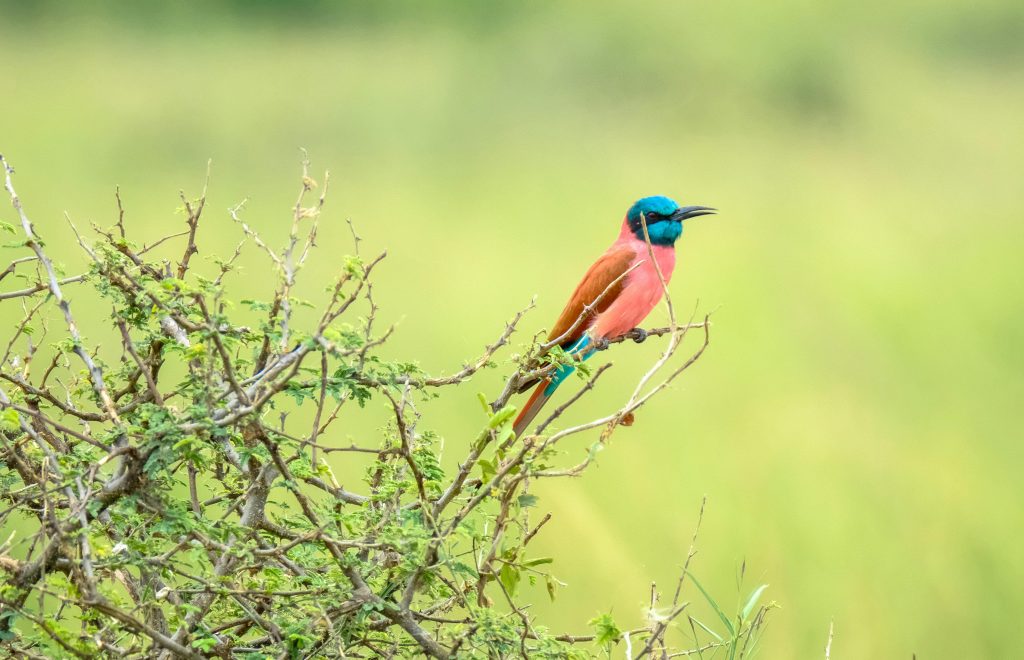
Ruaha is one of Tanzania’s best destinations for bird photography in the south. With a large range of habitats and hundreds of bird species, it is ideal for photographers who want both diversity and a remote safari feel. Ruaha is particularly strong for hornbills, rollers, kingfishers, sunbirds, bee-eaters, egrets, birds of prey, and several notable regional specialties. It is also a strong park for photographers who want to combine big mammals and birdlife in one more exclusive itinerary.

For most travelers, the northern parks provide an excellent introduction to bird photography in Tanzania. But for photographers who want something more specialized, regions such as Lake Natron, Rubondo, the Eastern Arc Mountains, Amani, Nyerere, and Ruaha open the door to a much deeper and more distinctive birding portfolio. This is where Tanzania becomes more than a classic safari destination — it becomes a truly diverse bird photography country.

Best Time for Bird Photography in Tanzania

November to April

This is one of the strongest seasons for bird photography in Tanzania, particularly in parks such as Lake Manyara and Arusha. Migratory birds are present during this period, and many resident birds are in breeding plumage, which makes color and courtship behavior especially attractive for photographers.

June to October

This is the classic dry season and can be very strong for combining bird photography with big game safaris. Wildlife is often easier to see overall, and birdlife remains rewarding, even if the green-season richness is reduced in some places.

The Green Season

For photographers who like atmosphere, richer tones, and a wider range of bird behavior, the greener months can be very rewarding. Light may be softer, landscapes more vivid, and the overall mood more photographic for certain styles. This is also when some travelers prefer to work on a more varied wildlife and bird portfolio rather than a classic dry-season safari look.

Final Thoughts

Bird photography in Tanzania is often underestimated — until you are there. Then suddenly the safari becomes fuller, richer, and far more varied. Between the famous mammal sightings, the country’s birdlife adds color, grace, detail, and surprise.

For photographers who want a broader and more complete wildlife portfolio, bird photography is not a side subject. It is one of the reasons Tanzania stands out.

Start Planning Your Tanzania Photography Safari

If you want a safari that balances iconic wildlife with beautiful birdlife, rich habitats, and more thoughtful time in the field, browse our Private Tanzania Photography Safaris or contact us to build a custom itinerary around your photographic goals.

Our Photography Safaris

Kilimanjaro Photography Guide

Kilimanjaro Photography Guide

Best Views, Gear Tips, and What to Expect

Photographing Mount Kilimanjaro is a dream for many landscape and adventure travelers. From lush rainforest trails and giant heathers to alpine desert, glaciers, summit signs, and wide-open views above the clouds, Kilimanjaro offers one of the most varied photographic journeys in Africa.

But great Kilimanjaro images do not happen by chance. The mountain brings rapidly changing weather, altitude, dust, rain, bright equatorial light, and freezing summit conditions. That means the best photographs usually come from travelers who arrive prepared — not only physically, but creatively and practically as well. Your original notes rightly emphasize that camera preparation, protection from weather, and thinking ahead about the kinds of images you want are all essential to success on the mountain.

Whether you are joining a Kilimanjaro day hike, a full summit climb, or simply want to improve your mountain photography, this guide will help you understand what to bring, how to protect your gear, and how to make the most of your time on the mountain.

Why Kilimanjaro Is So Special for Photography

Mount Kilimanjaro is not just one landscape. It is a progression of ecosystems and moods. In a single journey, you may move through:

  • rainforest and moss-covered forest trails
  • moorland with giant groundsels and heather
  • rocky high-altitude landscapes
  • glacier viewpoints and summit scenes
  • sunrise or sunset light above cloud level

This variety is what makes Kilimanjaro such a rewarding subject for photographers. It is not only about reaching the top. It is also about documenting the transition, the scale, the atmosphere, and the experience of being on Africa’s highest mountain.

For some travelers, the best images come from the summit sign and glacier edges. For others, the most memorable photos come much earlier — in the forest, on the Shira Plateau, or when the mountain appears through clouds in soft morning light.

What Kind of Kilimanjaro Images Should You Aim For?

One of the best things you can do before a Kilimanjaro trip is decide what kind of photographs matter most to you. Your original draft touched on this idea of preparing intentionally, and that remains one of the strongest principles for success.

You may want to photograph:

  • wide mountain landscapes
  • dramatic summit scenes
  • trekkers on the trail
  • sunrise or sunset over the slopes
  • glacial features and volcanic terrain
  • details such as boots, trekking poles, frost, tents, and trail texture
  • environmental portraits of hikers and guides
  • storytelling sequences that show the climb from forest to high altitude

The stronger your visual intention, the more prepared you will be when conditions shift quickly.

Best Camera Gear for Kilimanjaro Photography

The core idea from your draft is still correct: bring equipment that gives you flexibility, but do not overcomplicate your kit. Too much gear adds weight, slows you down, and makes it easier to miss the moment.

A practical modern camera setup

For most travelers, a strong Kilimanjaro kit includes:

  • one main camera body
  • one versatile zoom lens
  • one wider lens for landscape scenes
  • spare batteries
  • enough memory cards
  • lens cloths
  • weather protection

A good all-around combination might include:

  • a 24–70mm or similar zoom for general use
  • a 70–200mm or moderate telephoto for compression and distant detail
  • a wider lens if you love dramatic landscapes and trail perspectives

You do not need to carry every lens you own. On Kilimanjaro, simplicity often works better than quantity.

Do you need a second body?

A second camera body can be very useful if:

  • you want a backup in case of weather or failure
  • you want to avoid changing lenses in dusty conditions
  • you are serious about shooting different focal lengths quickly

For lighter travel, many hikers prefer one body and one versatile lens.


How to Protect Your Camera Gear on Kilimanjaro

This is one of the most important parts of Kilimanjaro photography, and your original notes were right to emphasize it. The mountain takes you from tropical moisture to freezing summit conditions, so camera care matters a lot.

Protect against rain and dust

Bring:

  • waterproof dry bags or zip bags
  • a rain cover for your camera or backpack
  • sealed pouches for batteries and memory cards
  • microfiber cloths for lens cleaning

Dust and moisture are often a bigger problem than people expect.

Protect against cold

Cold temperatures, especially on higher routes and summit attempts, can reduce battery life quickly. Keep batteries:

  • in inner pockets close to your body
  • warm when not in use
  • rotated if one begins to weaken

A camera left exposed for too long in freezing wind can also become difficult to operate comfortably, especially near the summit. Your original notes emphasize keeping gear warm and ready before summit moments, and that is still excellent advice.

Keep gear accessible

Do not bury your camera at the bottom of your bag. If you have to stop, unzip, search, and change equipment, the moment may already be gone. Accessibility matters as much as protection.

Tips for Better Photos on Kilimanjaro

ravel with your shot in mind

Think before the trip about the images you most want to make. This helps you react more quickly when light and landscape align.

Keep your camera ready

The best trail moments often happen unexpectedly — a break in the cloud, a hiker on a ridgeline, a shaft of light in the forest. A ready camera is often the difference between seeing and capturing.

Use people for scale

Kilimanjaro is vast. Including trekkers, guides, or porters in the frame can make your images feel more human and dramatic.

Don’t focus only on the summit

Some of the strongest Kilimanjaro photographs are made lower down: in forest, moorland, camps, and transitional zones. The story of the climb is often more powerful than one single summit shot.

Respect the mountain rhythm

If you are on a full trek, altitude and fatigue are real. Photography should support the experience, not distract from safety and pacing.


Summit Photography: What to Expect

If you are doing a summit climb, conditions near the top are often cold, windy, and physically demanding. This means summit photography needs to be simple and efficient.

Before summit push:

  • set your camera up in advance
  • choose your main lens early
  • keep batteries warm
  • reduce the need for lens changes
  • know what shots matter most to you

Your original draft made a very good point here: the summit is not the place to fumble with gear, swap lenses unnecessarily, or overcomplicate the process, In reality, some of the best summit images are often:

  • quick portraits
  • wide sign-and-glacier shots
  • atmospheric scenes with light and cloud
  • candid emotion after the climb

Explore Our Kilimanjaro Experiences

If you want to experience Kilimanjaro with more intention — whether on a scenic day hike or as part of a longer mountain journey — explore our Kilimanjaro day hikes and climbing experiences designed for strong guiding, beautiful scenery, and memorable storytelling moments.

You can also contact us for advice on:

  • the best Kilimanjaro route for photography
  • day hike vs multi-day climb
  • what to pack for mountain photography
  • how to combine Kilimanjaro with safari or cultural experiences

Our Photography Safaris