

Mount Kilimanjaro National Park

[vc_row][vc_column][vc_column_text]Mount Kilimanjaro is a dormant stratovolcano located in Tanzania. Standing at 5,985 meters (19,341 feet), it is the highest point in Africa and is known locally as ‘The Roof of Africa’ as a result.

It is also the tallest free-standing mountain in the world – meaning it is not part of a mountain range. Kilimanjaro is also unique as it is located just 330km from the equator. The mountain is composed of three distinct volcanic cones – Kibo (5,895m), Shira (3,962m) and Mawenzi (5,149m), with Kibo being the highest at Uhuru Peak. While Mawenzi and Shira are extinct, Kibo is dormant and could erupt again in the future.

Climb Kilimanjaro

Compared to other mountains, Mount Kilimanjaro is a relatively easy climb. You don’t need to be a professional climber to attempt the ascent, although a good level of physical fitness is a must.

With the assistance of our professional guide team, we can get you to the peak so that you can gaze out across Africa.

Our experienced mountain guides will ensure that your climb to the roof of Africa is as safe and easy as possible. They have an intimate knowledge of the various routes and the climate conditions, allowing them to predict changes and avoid accidents along the way.

Weather on Kilimanjaro

At 100 kilometres in length and 60 kilometres in width, Mount Kilimanjaro has its own climate and five distinct vegetation zones. The climatic conditions on Mount Kilimanjaro change with the altitude; ranging from a tropical climate at its base to arctic conditions at the summit.

Kilimanjaro’s foothills enjoy a yearlong summer, with temperatures at the base averaging 25-30C year round. Conversely, temperatures at the summit range from a chillier -10C to -20C. As a rule of thumb, the temperature drops by 1C for every 200m you ascend.

The mountain experiences two rainy seasons: the monsoon (or long rainy season) between March and May, and the short rainy season from mid-October until late December. At the base, the mountain has upwards of 2,000mm of rain per year, compared to just 100mm of rain at the summit.

Kilimanjaro’s Distinct Vegetation Zones

Climbing Kilimanjaro is not just about defeating the mountain and standing atop it. An ascent is also a fascinating journey through multiple climate and vegetation zones, each a distinct habitat with unique flora and fauna.

  • The Farmland Zone (800 – 1,800 meters);
  • Mountain Forest (1,800 – 2,800 meters);
  • Low Alpine Zone (2,800 – 3,800 metres);
  • Alpine zone ( 3,800 – 5000 metres )
  • The Summit (5000+ metres).

The Farmland Zone (800 – 1,800 meters)
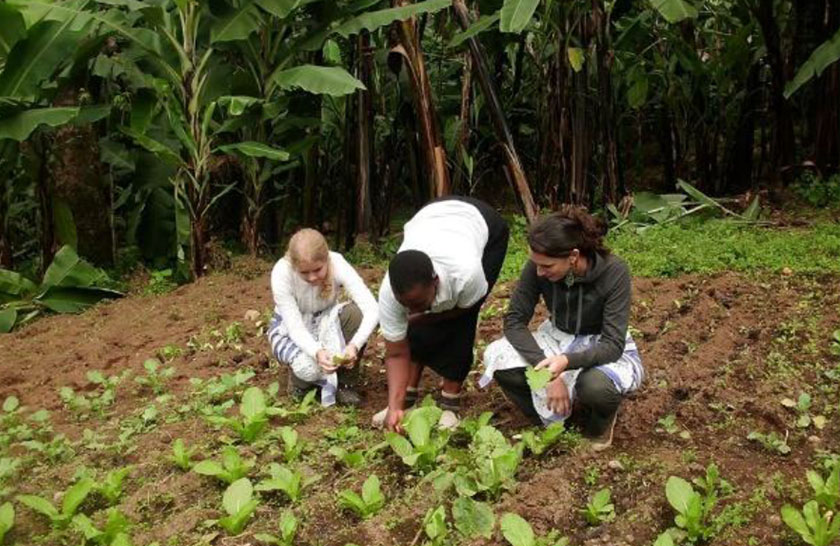
Characterized by vast fields of grass, the slopes between 800 and 1,800m receive plenty of rainfall. The Chagga people use this area for agriculture and livestock due to the rainfalls and the rich, volcanic soil. The locals primarily harvest coffee and bananas in this zone, although maize, beans, and other crops are also grown. The northern and eastern slopes are not as heavily cultivated, and so more native vegetation can be seen in these areas. There are no wild animals in the farmland zone, but you can still see lowland forest, bush land, wildflowers, and scrub.

Mountain Forest (1,800 – 2,800 meters)
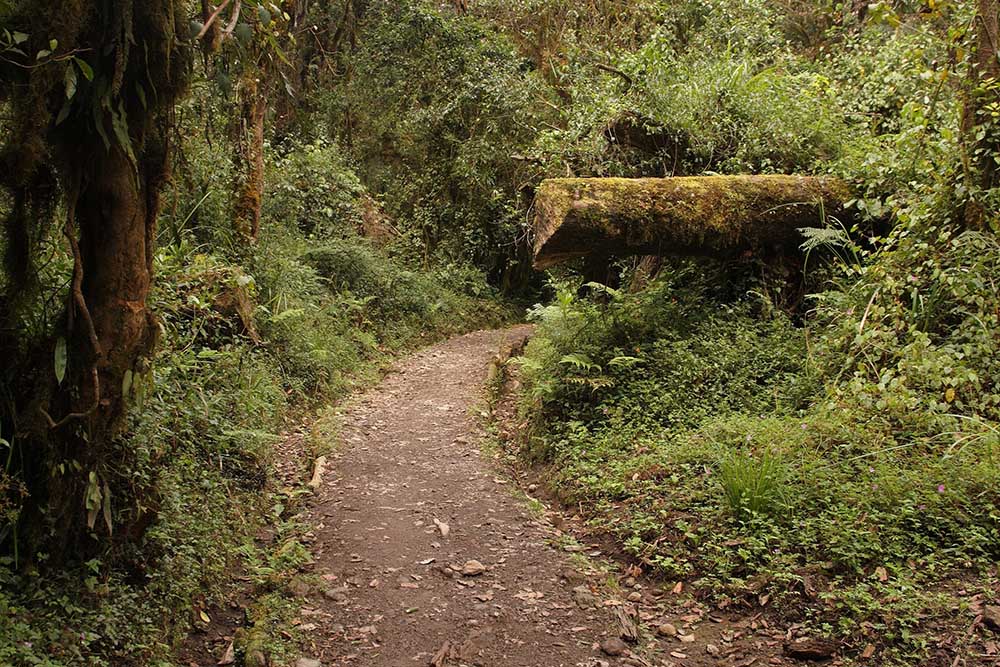
Beginning at 1,800m, the mountain forest zone is the most fertile of all of Kilimanjaro’s vegetation zones. About 96% of Kilimanjaro’s rain falls in this zone, and so the region is extremely wet for most of the year. The thick vegetation is home to animals such as blue monkeys, elephants, black and white colobus monkeys, bush pigs, squirrels, duikers, elands, and even leopards; although these can be difficult to spot in the thick undergrowth. Unlike most East African mountain forests, Kilimanjaro’s forests do not have bamboo trees. They do, however, have an impressive variety of bird life.

Low Alpine Zone (2,800 to 3,800 metres)
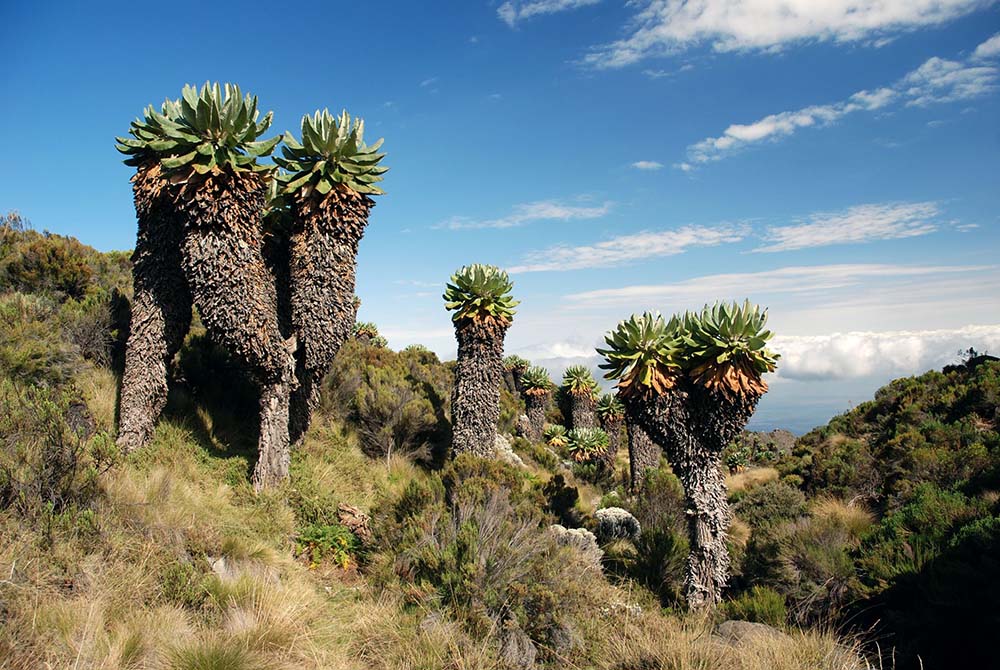
Stretching from 2,800m to 3,800m, the low alpine zone has two overlapping vegetation types: heaths and the moorland. The misty heaths begin immediately above the treeline and experience cooler (around 0C or below) temperatures and fairly high rainfall (approximately 1300mm a year). Broad grassy fields dotted with wildflowers characterise this part of the low alpine zone, and animals such as elands, duikers, bushbucks, and buffalo can be seen here. Beautiful flora such as the yellow-flowered Protea, red-hot poker, Erica Arborea (tree heath), and a number of other plants unique to the area can also be seen. At approximately 3,200m, the moorlands begin. The air begins to thin at this point, making hiking more difficult and ensuring clear skies overhead. Despite these harsher conditions, it is still possible to see a variety of wildlife such as elephants, elands, klipspringers, and a variety of local rodents at this height. The giant Dendrosenecio Kilimanjari, unique to the mountain, dominates the plant-life in this zone.

The Alpine Zone (4,000 to 5,000 metres)
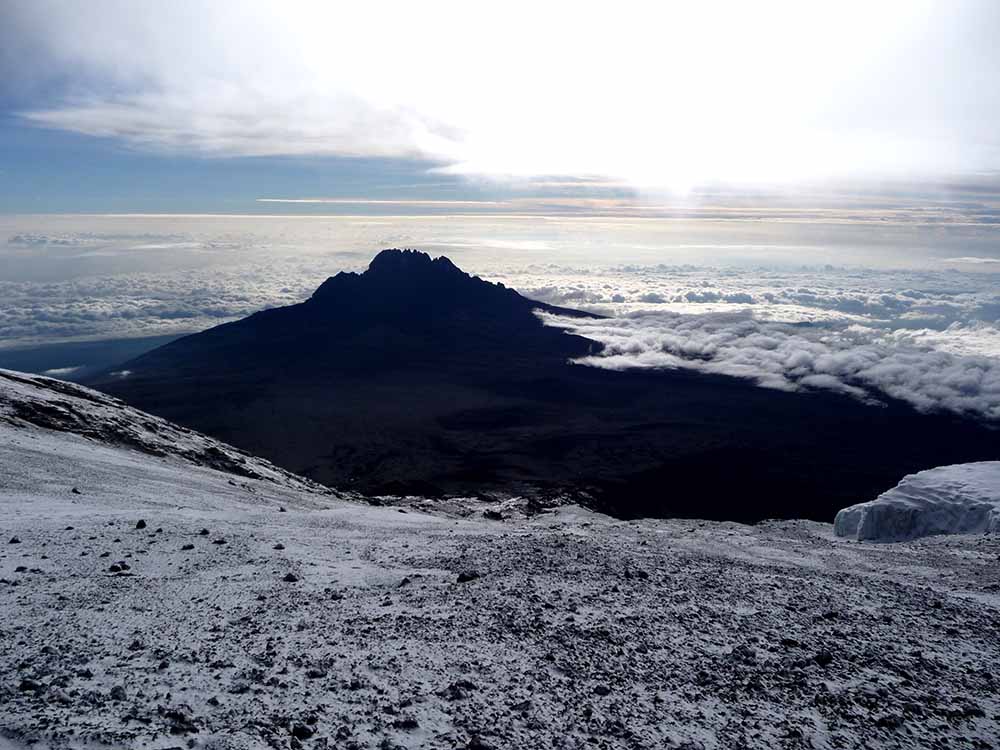
At around 4,000 metres the alpine zone begins. An area of alpine desert with sandy soil and harsh weather, it is here that the temperatures begin to have extreme variations that can jump between 40C during the day and below 0C by night. There are no permanent animal populations at this height, and plant life is limited to hardy flowers and mosses.

The Summit (5000+ metres)
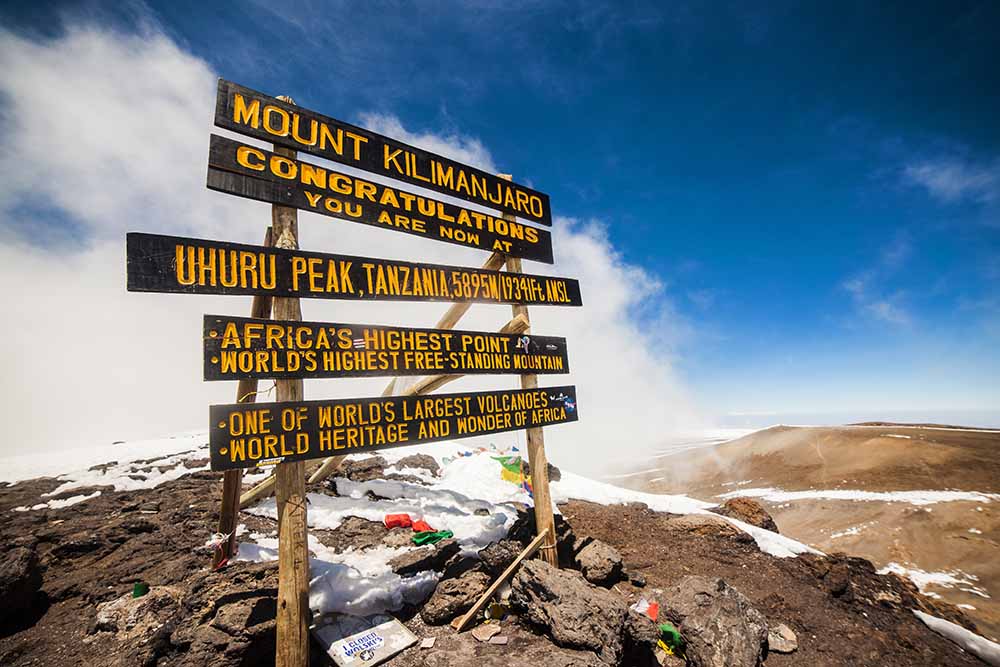
At this height, there is only rock and ice. Only insects and the hardiest forms of lichen can exist in these harsh conditions. The summit has a number of glaciers, the most prominent of which is the Great Northern Glacier at Kibo’s northern face.[/vc_column_text][/vc_column][/vc_row]

Udzungwa Mountain National Park

[vc_row][vc_column][vc_column_text]Harbouring one of East Africa’s great forests, Udzungwa Mountain National Park has an area of 1990 sq km, bordered by the Great Ruaha River to the north, with Mikumi National Park and Selous Game Reserve located further to the north and east. Protected as a national forest reserve until  1992  when  it  was  commissioned  as  National  Park,  Udzungwa Mountains is undoubtedly one of the few true virgin and unique forested lands remaining in the world. The major attractions include its biologically diverse forest, harbouring some plant species found nowhere else in the world, from a tiny African violet to 30-metre high trees.

Apart from the forest, which acts as a water catchment area and has a large number of endemic species of both animals and plants, the park has spectacular mountains scenery, grasslands, rocks, rivers and waterfalls. One of the most interesting sights is the presence of two indigenous species of primates, the Iringa red colobus monkey and the Sanje Crested Mangabey, not known until 1979. Apart from providing habitat to about six species of primates, its plateau contains populations of elephants, buffalos, lions, leopards, African hunting dogs and several forest bird species.

Walking safaris to the Sanje River waterfalls (170 metres) is one of the popular activities in this park. Udzungwa Mountains can conveniently be combined with game drives in nearby Mikumi National Park, an hour drive to the north, or be included in the Ruaha National Park (4-5 hours drive) and Selous Game Reserve itineraries. The park can be visited throughout the year although it is a bit slippery during the wet rainy season. The dry season extends from June to October.

Info

Size: 1,990 square kilometres.

Location: Five hours from Dar es Salaam.

Best Time: June to October.

To Do: Game drives and waterfall hikes.

Known For: Hiking[/vc_column_text][/vc_column][/vc_row]

Tarangire National Park

[vc_row][vc_column][vc_column_text]Tarangire National Park lies 120 km south of Arusha, along The Great North Road highway, and is popular for day trips from the town. Tarangire offers a wide variety of wildlife in its area of 2,850 sq. km. As in all ecosystems, the vegetation and the types of animals you find are closely correlated. The principal features of the park are the flood plains and the grassland, mainly comprising various types of acacia trees, and baobabs trees, tamarind and the sausage trees.

The Tarangire River, after which the park is named, provides the only permanent water for wildlife in the area. When the Maasai Steppes dry up with the end of the long rains in June, migratory animals return to the Tarangire River, making Tarangire National Park second only to Ngorongoro in the concentration of wildlife. This period stretches between June and October and it is the best season for game viewing in Tarangire. The most common animals found in the park include zebras, wildebeest, lions, leopards, waterbucks, giraffe, elephants, gazelles, impala, gerenuk, lesser kudu and the beautiful fringe-eared oryx. You may be lucky to spot the tree-climbing python, for which the park is famous, or the greater kudu and the roan antelope which are rare species in Northern Tanzania. Over 550 bird species have been recorded in the Park.

Info

Size: 2,850 square kilometres.

Location: 120km southwest of Arusha.

Best Time: Year round, but the dry season (June to october) is the best.

To Do: Guided walking safaris, game drives, and cultural visits to nearby villages.

Known For: Elephants, Bao-bab trees[/vc_column_text][/vc_column][/vc_row]

Serengeti National Park

[vc_row][vc_column][vc_column_text]Covering an area of 14,763 sq. km, Serengeti National Park is the second largest National Park in Tanzania after Ruaha. The park is located some 320 km to the northwest of Arusha, lying in a high plateau between the Ngorongoro highlands and the Kenya/ Tanzania border, and extending almost to Lake Victoria to the west. Aptly named “endless plains” by the Maasai people, you immediately experience this vastness as you enter the southeastern plains of the park from Ngorongoro.

Declared a protected area in 1921 and gazetted as a National park in 1951, Serengeti is the oldest National Park in Tanzania and undoubtedly one of the most famous wildlife sanctuaries in the world. The principal features of the Serengeti are the short and long grass plains in the south and east, the acacia Savannah in the central areas, the hilly and densely wooded areas in the north and the extensive woodland in the west.

There is a variety of scenery, which include the plains, lakes, hills and the rock outcrops called kopjes which you can even explore by horseback. The main game drive areas in the Serengeti are the Seronera Valley, the Western Corridor, and Lobo or northern Serengeti. The Seronera valley in central Serengeti endowed with permanent surface water attracts a large concentration of wildlife throughout the year. Common animals that can be seen here are lions, buffaloes, impalas, hippos, waterbucks, elephants, cheetahs and the leopard. From December, when the long rains start, to May, eastern Serengeti plains provide the best opportunities for game viewing as hundreds of thousands of the migratory animals are concentrated in this part attracted by the short palatable grass.

Between May and July, when drought sets in, Serengeti is the site of one of the most breathtaking events in the animal kingdom – the migration of thousands of wildebeest heading southwest, north or west in search of water and greener pastures. The Lobo area remains rich in wildlife during the dry months of August to November when most of the game has moved from the grass plains in the south. This is also true of the Western Corridor towards Lake Victoria when the migration usually lingers in the area between June and July. Serengeti provides sanctuary to the highest concentration of plains animals in the world. Survey estimates indicate an animal population of over 4 million including 3,000 lions, 1,600,000 wildebeest, 300,000 Thomson‘s and Grant‘s gazelle, 500,000 zebras. There are over 400 species of birds in the Serengeti.

Info

Size: 14,763 square kilometres.

Location: 320 north of Arusha.

Best Time: December to July for the Great Wildebeest Migration. June to October for predators.

Things to Do: Great Migration, hot air balloon safaris, game drives,Walking safari,Olduvai Gorge, Lake Natron, Ol Doinyo Lengai volcano, and flying safaris.

Known For: The Great Wildebeest Migration. The world’s most famous game viewing park[/vc_column_text][/vc_column][/vc_row]

Selous Game Reserve

[vc_row][vc_column][vc_column_text]The Selous Game Reserve, with an area of about 55,000 sq. km, is the largest well-watered wildlife sanctuary in Africa, and one of the largest protected areas in the world. Its size is simply stunning, bigger than Switzerland, uninhabited and little touched by human interference. It is perhaps the most pristine wilderness still remaining in Africa, with a wide variety of wildlife habitats, including open grasslands, Acacia and miombo woodlands, swamps and riverine forests in the many tributaries of the mighty Rufiji River which flows through the reserve. Due to its unique ecological importance, it was designated a World Heritage Site by the United Nations in 1982. Its wildlife is spectacular, with some of its mammal and reptile populations the largest in Africa, namely buffaloes, elephants, hippos, wild dogs and crocodiles.

Other wildlife include the wildebeest, impala, waterbuck, zebra, eland, the greater kudu, sable antelopes, giraffe, baboon, the vervet and blue monkeys, and the black and white colobus monkey which can be seen in certain riverine forests moving from tree to tree in family groups. There is a large population of predators including lions, leopards, cheetah and the spotted hyena, and about 440 species of birds in the Selous, of both resident and migratory birds. Named after Captain Frederick Courtney Selous, a legendary 19th century naturalist, explorer and hunter, Selous Game Reserve was founded in 1905.

Selous is situated in the southern part of Tanzania, bordered by Mikumi National Park to the northwest and by Udzungwa Mountains National Park and Kibasira Swamp to the west. The greater part of northern Selous is reserved for photographic safaris, and it is one of the most beautiful and game-rich areas in the whole ecosystem.

The Selous wilderness meets the kind of dream visitors have of Africa of the early European explorers like Dr. Livingstone and Henry Stanley. The Reserve offers a wider variety of game viewing opportunities to the visitor, including the thrilling experience of a foot safari through game inhabited bushes in the company of an armed ranger. The many waterways in the Reserve provide an excellent natural setting for boat safaris, both for game viewing and bird watching. This is in addition to the game drives in 4X4 motor vehicles which, combined with boat and walking safaris, offer an exciting and richer game viewing itinerary unique to the Selous Game Reserve. The best time to visit the Selous is from June to October. During the long rains, between March and May, some parts of the Selous become impassable and are temporarily closed for game drives.

Info

Size: 55,000 square kilometres.

Location: A day’s drive from Dar Es Salaam.

Best Time: June to October or December to March.

To Do: Game drives, boat safaris, walking safaris, fishing, and hunting.

Known For: Tanzania’s largest reserve[/vc_column_text][/vc_column][/vc_row]

Ruaha National Park

[vc_row][vc_column][vc_column_text]Ruaha National Park takes its name from the Ruaha River, which flows along its southeastern border. The river provides permanent water in the park, and during the dry season animal concentration along its banks is spectacular. Ruaha National Park is about two to three hours drive from Iringa, a famous town on the Dar es Salaam to Zambia highway. Covering an area of 20,226 square kilometers, Ruaha is the largest National Park in Tanzania. Its borders were extended in 2008 to include Usangu Game Reserve to protect the Ihefu wetlands and the Great Ruaha River catchment areas and biodiversity.

This unspoiled wilderness is rich in flora and fauna, and contains a wide variety of animals that includes Greater and Lesser Kudu, roan and sable antelopes, which are rarely seen in most other game parks especially in Northern Tanzania. Ruaha National Park is famous for its herds of elephant and buffaloes. The Ruaha River, which plays an important role in the ecosystem of the park, provides sanctuary to a large number of hippos and crocodiles. During the dry season the river attracts great quantities of game including lions, leopard, hunting or wild dog, impala, waterbuck, warthog, giraffe, and elands. In the plains ostriches, cheetahs and Grant’s Gazelles can be seen. The park is rich in bird life throughout the year, with over 450 bird species recorded. The best time for game viewing is during the dry season, from May to December. During the wet months from January to April some tracks become impassable.

Info

Size: 20,226 square kilometres.

Location: Central Tanzania.

Best Time: Mid May to December.

To Do: Game drives, stone age ruins, and hiking.

Known For: Predator-prey viewing, elephants, and kudu[/vc_column_text][/vc_column][/vc_row]

Mikumi National Park

[vc_row][vc_column][vc_column_text]Sharing a common border and ecosystem with Selous Game Reserve to the south, Mikumi National Park is only three to four hours drive from Dar es Salaam, lying astride the main highway to Zambia, and en route to the National Parks of Udzungwa Mountains, Ruaha and Kitulo. The main feature of the park is the Mikumi flood plain, along with the mountain ranges that border the park on two sides. Open grasslands dominate in the floodplain, eventually merging with the miombo woodland covering the lower hills.

Mikumi National Park covers an area of 3,230 sq km, and is rich in wildlife including buffalo, wildebeest, zebra, lion, elephant, impala, hippos, baboon, giraffe, warthog, waterbuck and eland which can be viewed throughout the year. Reptiles including crocodile, monitor lizard and python are also resident in the park. Other animals that can be sighted although rare are the Sable Antelope resident in the southern part of the park bordering the Selous, the Greater Kudu, leopard, and the wild dog also known as the African Hunting Dog. More than 400 bird species have been recorded, including European migrants during the rainy season.

Mikumi National Park is one the most popular visitor points sold from our Dar es Salaam branch office. Being close to Dar es Salaam on a good road, day trips are popular especially for those who have little time to spend an overnight there. But it is recommended to spend at least a night in Mikumi to enjoy a fulfilling game drive in this beautiful park. A number of accommodation facilities are available in Mikumi.

Info

Size: 3,230 square kilometres.

Location: 283 km west of Dar Es Salaam.

Best Time: Year round.

To Do: Game drives and guided walks.

Known For: Hippopotamus and eland.[/vc_column_text][/vc_column][/vc_row]

Ngorongoro Conservation Area

[vc_row][vc_column][vc_column_text]A UNESCO protected World Heritage Site and an International Biosphere Reserve, the Ngorongoro Conservation Area is situated some 190 km. west of Arusha, between Lake Manyara and Serengeti National Parks. Covering approximately 8,292 square km, the Ngorongoro Conservation Area consists of the Ngorongoro Crater itself, the Olduvai Gorge and Ndutu, the Empakai crater and the Oldonyo Lengai Mountain. The Ngorongoro Conservation Area is a pioneering experiment in multi-purpose land use where people (the Maasai), their livestock and wildlife coexist and share the same protected habitat. Wild animals are protected as in the National Parks. The craters of Ngorongoro and Empakai are reserved exclusively for wildlife, while the rest of the Conservation Area is shared by wildlife, people and livestock. The Maasai, the main residents of Ngorongoro, are pastoralists who move widely with their herds of cattle, sheep, goat and donkeys in search of pasture and water. In recent years the Maasai have been encouraged to work on the land and supplement their traditional  diet of milk and meat.

The Ngorongoro Crater, which is the central attraction in the area, is the largest Caldera in the world that has its walls intact. The Ngorongoro Crater floor, a sheer drop of 610 metres below the crater rim, has an area of 304 sq. km, with a diameter of 19 km. The sight of the Ngorongoro Crater is simply stunning. “It is impossible to give a fair description of the size and beauty of the Crater, for there is nothing with which one can compare it. It is one of the Wonders of the World…” once wrote Professor Bernhard Grzimek. The crater floor is home to tens of thousands of plains animals, including wildebeest, zebra, gazelles, elands, and a large predator population of lions, hyena and jackal which can all be viewed at close quarters. The rare black rhino can be viewed here, and if you are lucky you can see cheetah and leopard. The rainy season is between November and May. The altitude at the crater rim is about 2286 metres above sea level, and temperatures can get quite chilly in the evening, especially between May to September.

NDUTU

Ndutu is located in the Ngorongoro Conservation Area, in the southeastern plains of the Serengeti ecosystem. The plains around Ndutu are the main holding ground for migratory animals where vast herds congregate and linger for more than four months, from December to April, before they start moving across the Serengeti in search of greener pastures and water. The Ndutu area forms an important part of the Serengeti ecosystem, in particular the short grass plains which provide calving grounds for wildebeest and other migratory animals.

Info

Size: 8,292 square kilometres.

Location: Between Lake Manyara National Park and Serengeti National Park.

Best Time: Year round.

To  Do: Game drives, Olduvai Gorge, visits to nearby Empakaai Crater or Olmoti Crater, Hiking and cultural visits.

Known  For:  Rhinoceros,  the starting point of the Great Migration, and stunning views[/vc_column_text][/vc_column][/vc_row]

Maasai Mara National Reserve

[vc_row][vc_column][vc_column_text]The Maasai Mara National Reserve (also known as Masai Mara and by the locals as The Mara) is a large game reserve in Narok County, Kenya, contiguous with the Serengeti National Park in Mara Region, Tanzania. It is named in honor of the Maasai people (the ancestral inhabitants of the area) and their description of the area when looked at from afar: “Mara,” which is Maa (Maasai language) for “spotted,” an apt description for the circles of trees, scrub, savanna, and cloud shadows that mark the area.

It is globally famous for its exceptional population of Masai lions, African leopards and Tanzanian cheetahs, and the annual migration of zebra, Thomson’s gazelle, and wildebeest to and from the Serengeti every year from July to October, known as the Great Migration. The Maasai Mara National Reserve is only a fraction of the Greater Mara Ecosystem, which includes the following Group Ranches: Koiyaki, Lemek, Ol Chorro Oirowua, Olkinyei, Siana, Maji Moto, Naikara, Ol Derkesi, Kerinkani, Oloirien, and Kimintet.[/vc_column_text][/vc_column][/vc_row]

Mahale Mountains National Park

[vc_row][vc_column][vc_column_text]Mahale Mountains National Park lies 120 km south of Kigoma town, on a peninsula in Lake Tanganyika on the western border of Tanzania. The park has an area of 1613 sq km and is dominated by the Mahale Mountains Chain running from north-west to south-east across the middle of the park, the highest peak, Mount Nkungwe, rising 2,462 meters above sea level. Its western boundary protects not only 63 kms of lakeshore but also the adjacent 1.6 km-wide strip of coastal waters. The park vegetation is mainly Miombo woodland with narrow strips of riverine forests, some rainforest and savannah which provide habitat to a variety of animal species.

Mahale Mountains like its northerly neighbour Gombe Stream, is home to some Africa’s last remaining wild chimpanzees, with an estimated population of about 800, found in the rain forests of Mahale together with other rainforest animals including the Angolan colobus monkey and other primates. Species found in Miombo woodland include roan antelopes, sable antelopes and lichtenstein hartebeest, while the savannah provide habitat to warthogs, giraffes, grant’s zebras, hyenas and lions.

About 82 species of mammals have been recorded in Mahale, a remote road-free park accessible only by boat or light aircraft. The park is rich in bird life with over 350 bird species recorded. Mahale is bordered to the west by Lake Tanganyika, the world’s longest, second deepest and perhaps least-polluted freshwater lake, which harbour a variety of fish species, with about 250 species found nowhere else on earth. Mahale offers a variety of attractions for visitors, from tracking wild habituated chimpanzees, to mountain climbing, snorkeling, fishing, kayaking and relaxing on pristine, white, sandy beaches of Lake Tanganyika.

Info

Size: 1613 square kilometres.

Location: Western Tanzania near Lake Tanganyika.

Best Time: May to November.

To Do: Chimpanzee trekking, hiking, camping, and fishing.

Known For: Chimpanzees.[/vc_column_text][/vc_column][/vc_row]