Tanzania is often celebrated for big cats, elephants, and the Great Migration, but it is also one of the most rewarding destinations in Africa for bird photography. Across its lakes, wetlands, forests, river systems, savannahs, and remote parks, the country offers an extraordinary range of birdlife, making it ideal for photographers who want color, detail, behavior, and variety in their safari portfolio. Tanzania’s best-known safari areas also happen to be excellent birding regions, with parks such as Tarangire, Serengeti, Lake Manyara, Arusha, and Ngorongoro all supporting rich bird populations.
For many travelers, bird photography begins as a secondary interest and quickly becomes one of the most rewarding parts of the safari. Between dramatic wildlife sightings, Tanzania’s birds bring movement, texture, shape, and vivid color to the day. A roller on a branch, a fish eagle in flight, a flamingo-filled lake, or a hornbill crossing early morning light can become just as memorable as a lion sighting. In fact, Tarangire alone is recorded with about 550 bird species, while the Serengeti has more than 530, and Lake Manyara has more than 350 identified species.
Tanzania offers an exceptional range of bird photography locations, from famous northern safari parks to remote wetlands, Rift Valley lakes, forest reserves, and wilderness areas in the south and west. This variety is one of the reasons Tanzania stands out so strongly for bird photographers. Whether you are interested in raptors, waterbirds, flamingos, forest species, endemic birds, or colorful savannah specialists, the country offers remarkable diversity across very different habitats.
Lake Manyara National Park
Lake Manyara remains one of the classic bird photography destinations in northern Tanzania. Its mix of lake edge, groundwater forest, escarpment, and wetland habitat gives photographers the chance to work with flamingos, pelicans, herons, storks, and many smaller colorful species in varied settings. It is especially attractive for photographers who want both birdlife and strong scenic backdrops.
Tarangire National Park
Tarangire is widely known for elephants and baobabs, but it is also one of Tanzania’s most rewarding parks for bird photography. It is especially strong for raptors, scavengers, and dry-country savannah birds, making it a good choice for photographers who want birdlife within a classic wildlife safari setting.
Serengeti National Park
Although the Serengeti is most famous for mammals and migration photography, it also offers excellent bird photography opportunities, especially for raptors, scavengers, and birds photographed within open plains landscapes. For photographers who want a well-rounded wildlife portfolio, the Serengeti adds important variety.
Momella Lakes, Arusha National Park
The Momella Lakes, found in the northern section of Arusha National Park, are among the most attractive bird photography areas in northern Tanzania. Fed by underground streams, these lakes are especially rewarding for waterbirds. Flamingos, pelicans, little grebes, herons, ducks, and a wide range of waders are regularly seen here, often in beautiful reflective conditions that work very well for photography.
Lake Natron
Lake Natron is one of Tanzania’s most dramatic and distinctive bird photography locations. Set in a harsh Rift Valley landscape north of Ngorongoro, it is famous for its importance to lesser flamingos and for the striking visual contrast of caustic waters, mineral tones, and arid surroundings. Even beyond flamingos, the landscape itself gives bird photographers a rare and memorable setting unlike anywhere else in Tanzania.
Rubondo Island
Rubondo Island, in the southern reaches of Lake Victoria, is one of Tanzania’s lesser-known but highly interesting bird photography destinations. Its forested and freshwater habitats offer a very different photographic atmosphere from the savannah parks, making it an appealing choice for photographers looking for something quieter, greener, and more unusual.
Eastern Arc Mountains
For photographers with a special interest in endemic and near-endemic species, the Eastern Arc Mountains are among the most important bird habitats in Tanzania. The Udzungwa, Usambara, and Uluguru Mountains hold isolated highland habitats that support a remarkable concentration of rare and localized birds. This region is especially meaningful for specialist birders and photographers who want to go beyond mainstream safari birding.
Amani Nature Reserve
Located within the Eastern Arc system, Amani Nature Reserve is one of the most exciting and accessible forest birding areas in northeastern Tanzania. For travelers hoping to photograph some of Tanzania’s endemic or near-endemic species, Amani is one of the most important places to consider. It works particularly well for those who want a more specialized bird photography experience.
Nyerere National Park / Selous Area
Southern Tanzania also offers excellent bird photography. The Selous ecosystem, now largely associated with Nyerere National Park, is especially attractive because of the Rufiji River system and associated wetlands. This creates strong opportunities for species such as fish eagles, kingfishers, secretary birds, and other water-associated or open-country birds. For photographers, it combines rich birdlife with a wilder and less crowded safari atmosphere.
Ruaha National Park
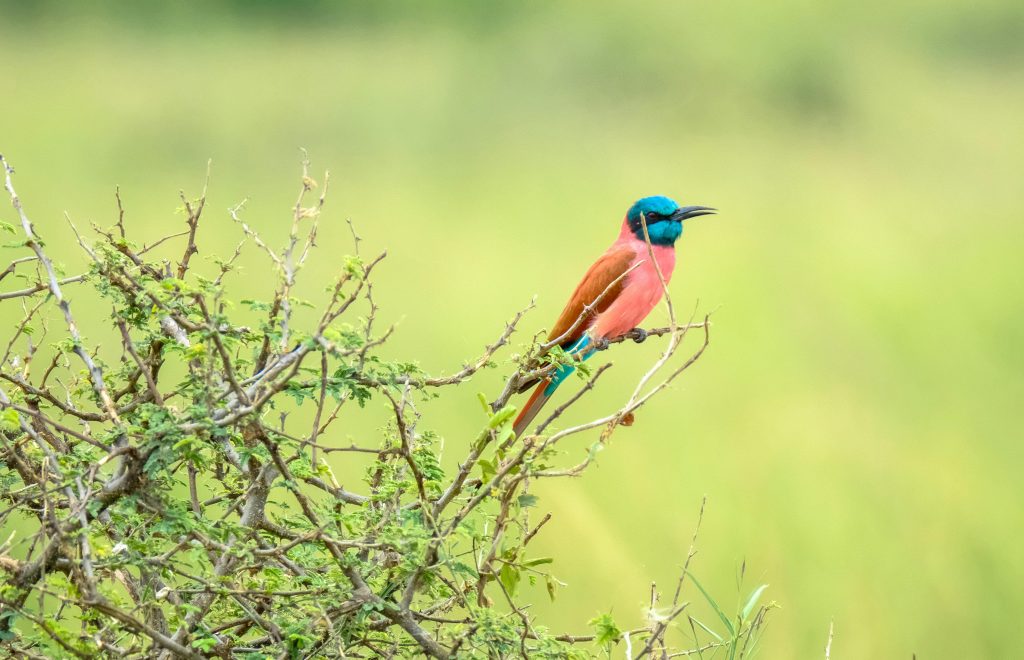
Ruaha is one of Tanzania’s best destinations for bird photography in the south. With a large range of habitats and hundreds of bird species, it is ideal for photographers who want both diversity and a remote safari feel. Ruaha is particularly strong for hornbills, rollers, kingfishers, sunbirds, bee-eaters, egrets, birds of prey, and several notable regional specialties. It is also a strong park for photographers who want to combine big mammals and birdlife in one more exclusive itinerary.
For most travelers, the northern parks provide an excellent introduction to bird photography in Tanzania. But for photographers who want something more specialized, regions such as Lake Natron, Rubondo, the Eastern Arc Mountains, Amani, Nyerere, and Ruaha open the door to a much deeper and more distinctive birding portfolio. This is where Tanzania becomes more than a classic safari destination — it becomes a truly diverse bird photography country.
November to April
This is one of the strongest seasons for bird photography in Tanzania, particularly in parks such as Lake Manyara and Arusha. Migratory birds are present during this period, and many resident birds are in breeding plumage, which makes color and courtship behavior especially attractive for photographers.
June to October
This is the classic dry season and can be very strong for combining bird photography with big game safaris. Wildlife is often easier to see overall, and birdlife remains rewarding, even if the green-season richness is reduced in some places.
The Green Season
For photographers who like atmosphere, richer tones, and a wider range of bird behavior, the greener months can be very rewarding. Light may be softer, landscapes more vivid, and the overall mood more photographic for certain styles. This is also when some travelers prefer to work on a more varied wildlife and bird portfolio rather than a classic dry-season safari look.
Bird photography in Tanzania is often underestimated — until you are there. Then suddenly the safari becomes fuller, richer, and far more varied. Between the famous mammal sightings, the country’s birdlife adds color, grace, detail, and surprise.
For photographers who want a broader and more complete wildlife portfolio, bird photography is not a side subject. It is one of the reasons Tanzania stands out.
Start Planning Your Tanzania Photography Safari
If you want a safari that balances iconic wildlife with beautiful birdlife, rich habitats, and more thoughtful time in the field, browse our Private Tanzania Photography Safaris or contact us to build a custom itinerary around your photographic goals.