
Kilimanjaro FAQ

Kilimanjaro FAQ

  • What physical criteria will ensure I’m fit enough to trek?

    You should be in good enough shape to walk continuously throughout the day. Good overall fitness, flexibility, and healthy will ensure you trek safely and comfortably. Those with acute or chronic health conditions impacting their stamina, range of motion, coordination, or balance may have difficulty completing the trek. If you are in doubt about your own physical readiness, consult a physician well in advance of booking your trip! General hiking experience and comfort with the idea of multi-day hiking will also ensure you are 100% ready to trek!
  • How will we deal with altitude acclimation?

    The best scenario is to acclimatize slowly. The trekking trips up Kilimanjaro is a fairly rapid ascent and trekkers should report any problems to their guide. Common symptoms of mountain sickness include headaches and cough.

  • Why is a guide necessarily? I’ve trekked/hiked/camped before – can’t I guide myself?

    Guides are a requirement on Kilimanjaro set by the Tanzania National Park Service.
  • What happens if I get sick or injured while trekking?

    We take all possible precautions to proactively ensure the safety and wellness of our trekkers, but rest assured that our guides are trained and experienced in dealing with emergencies. Each guide is trained in first aid. In the case of altitude sickness, you will immediately be taken to a lower altitude. If necessary, your guide will utilize the park rescues services for immediate evacuation.

  • What do I need to know about sun protection?

    It may seem counter-intuitive, but your skin is in more danger of sun damage on the mountains than while at the beach! The sun’s intensity increases dramatically as we rise in altitude, and fresh snow reflects exponentially more UV rays than does the sand. You will need to protect your skin with clothing and sunblock. A sunblock specifically for mountain conditions is recommended. If you wear prescription eyeglasses it’s recommended that you get your prescription fitted to sunglasses.

  • Are solo female travelers safe climbing Kilimanjaro?

    Yes, we ensure the travel safety of all our trekking guests, both male and female. We have long standing, strong relationships with the lodges we frequent, and know them to be safe and reliable. In addition our guides are consistently mindful of all guests’ whereabouts while trekking. We travel in small groups, all the better to easily maintain continual contact.

  • Age?

    The official age limit set by the Kilimanjaro National Park Authority for climbing Uhuru Peak is 10 years old, we usually recommend a minimum age of 13 years. If anyone in your group is under 16 years of age please inform us in advance so arrangements can be made.

  • How difficult is climbing Kilimanjaro?

    The trek to the Barafu Hut is only moderately difficult with a good trail with the only really steep point being the Barranco Wall. The final push to the summit ridge takes about 6 hours and is very steep and cold. This last steep section is mostly switchbacks and then some easy rock scrambling near the top. Your guide will set a very slow pace. Most reasonably fit individuals can make it so long as they are not having any difficulty acclimatizing.

  • Is previous trekking experience really necessary?

    While it’s not technically required it’s a good idea. Kilimanjaro is not the easiest trek and it’s good to have some previous experience and know what you are getting into and what trekking is.

  • What should I pack for my trip?

    We have a complete packlist or if you want more details you can always contact us and we will be glad to give you further assistance on packaging matters.

  • What type of insurance should I have? Where can I obtain a policy?

    Your park entrance fee includes the cost of rescue off the mountain which will be organized by the Tanzanian National Park Service in conjunction with our team. In addition, it is strongly recommended that you have adequate travel insurance. While the park service will provide rescue services your travel insurance will cover any cost related to cancellation charges, unexpected curtailment of your holiday, medical and repatriation expenses including air ambulance, personal accident, delay loss or damage to your personal effects. If you don’t have it already we recommend either Cover More or World Nomads.

  • Are any permits required for climbing Kilimanjaro?

    Permits are required and included in the cost of the trek. You will get your permit at the gate on the first day of the trek.

  • What sort of footwear is recommended?

    A good pair of hiking boots are important for the final climb as they help to keep your feet warm and provide adequate ankle support. Tennis shoes are sufficient on the other days of the trek.

  • How much money should I bring along?

    You should bring enough to cover the tips at the end of the trek. Other than that our treks are all-inclusive. We cover accommodation, food, park fees, permits, and many other costs, as a means of making your adventure as stress-free and convenient as possible. Previously, it was possible to buy snacks and other items on the trek but the park service has eliminated all vendors and once you get on the mountain there are no opportunities to spend any money.

  • What communication options exist while trekking?

    Your guide should be able to arrange a phone call or to get a message relayed in the case of emergency. Don’t expect any communication options although it is possible you will have cell signals in some locations.

  • How long do we spend walking each day?

    The typical time spent walking is about 5 to 6 hours. On the summit day you will spend 12 to 16 hours trekking. However, you will be given a few hours to rest at Barafu so that this long day of trekking is broken into two parts. We make the summit push and descent all in one day to avoid acclimatization problems.

  • What kinds of accommodations are available on Kilimanjaro?

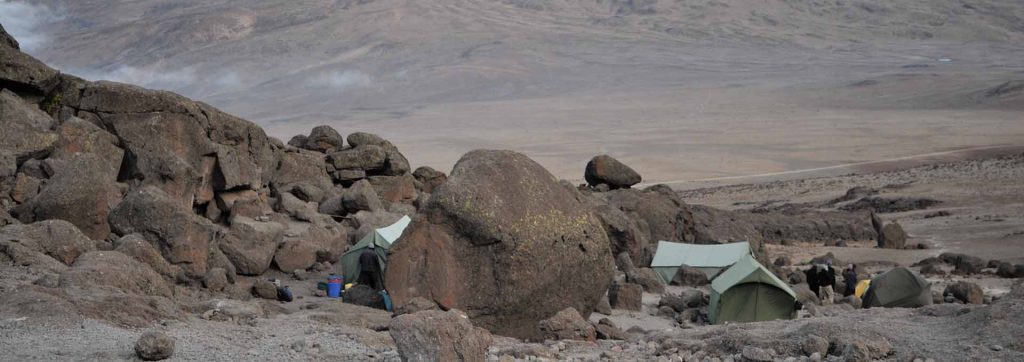
    We offer tented camping in All routes except the Marangu route. Your camp crew will set up the tents before you arrive. Tents are on twin sharing and private tents may be available for individuals travelling alone.

  • Will my mobile phone work? What about internet access?

    Your mobile service may work at one or two points on the mountain but don’t count on it. If you have a phone call that needs to be made during the trek please speak with your guide and he may be able to arrange.

  • Where will our drinking water come from?

    Drinking water is obtained on the mountain and then boiled before it is provided to you. Disposable plastic water bottles are not allowed on the mountain.

  • Where do we eat our meals?

    Lunch is packed and eaten on the trail during the day. You will take breakfast and dinner in the dining tents that are set up.

  • What about showers?

    Your guide can provide you with a bucket of hot water both in the evening and the morning for washing.

Our Kilimanjaro Treks

Preparing For Your Kilimanjaro Expedition

Preparing For Your Kilimanjaro Expedition

The very best way to prepare for climbing to high altitude is to climb to high altitude. Although this is difficult for most people, remember that the higher the altitude you can reach and the longer the hikes you do for training, the better. Whether it be to hike 2,000 feet to the top of the local hill or climbing larger mountains further afield; just being out hiking uphill is the best. This also allows you to get used to your backpack and boots.

You should be hiking with everything in your day pack that you anticipate carrying when climbing Kili.

Running and biking are also very good and at least take you outdoors so you can test your equipment. Stair masters and climbing machines at the gym will work if outdoor hiking isn’t an option. Try not to go for short hard blasts of exercise but long sustained workouts instead. An adequate training regime is to maintain 75% of your max heart rate (220 minus your age) for an hour, three to four days a week. Remember high altitude mountain climbing requires acclimatization and that a strong mind is as important as a strong body. If you are fairly fit and choose a climbing itinerary that allows plenty of time to acclimatize you have the formula for success.

What to Pack

For the Head and Face:

  • Pile or Wool hat: Bring one that covers ears, a balaclava type is excellent.
  • Shade Hat: Visor hats with good brims are essential for protection from the equatorial
  • Sunglasses: Essential for eye protection in the tropics, at altitude. Bring a good quality pair, preferably with an IREX protection rating of 100. Attachable side shields are necessary, or bring glacier
  • Sunscreen: Bring plenty of complete sun blocks with a protection factor of 15 or more. Unless you have spent time in equatorial sun you will probably underestimate the amount necessary, so bring
  • Lip Balm: With SPF rating of 15 or more.
  • Bandanas: Tied around the neck they give good sun protection. Cleaning glasses, as wash clothes, They dry very quickly.

For the Upper Body:

  • Upper Body Layers: For climbing the mountain we recommend you have three warm layers for the upper Items must be made of wool, synthetic or pile. Make sure all layers fit comfortably over each other and supply good insulation. A good combination is a long underwear top, a sweater, and a pile jacket or heavy wool shirt. Cotton items do not provide adequate insulation and are completely useless when damp.
  • T-Shirts: Two T-shirts that you don’t mind getting dirty while on the mountain. Synthetic is
  • Rain Parka: Afternoon showers are common in East Africa, especially on the Bring a good parka Gore Tex or waterproof nylon that has been “seam sealed”.
  • Wind Shirt: (optional if you have Gore Tex rain gear) A nylon wind shell (not waterproof), roomy enough to fit comfortably over all upper body Gore Tex is good for both this wind shirt and for the rain coat.
  • Poncho: (Optional) Quick and handy protection for body and rucksack. Poor protection in windy
  • Gloves or Mittens: Wool or pile. One pair of heavy mittens and a light pair of gloves work
  • Mitten Shells: One pair to go over your mittens. These are for use against the winds sometimes encountered in the crater and on the way to the

For the Lower Body:

  • Quick Dry Hiking Shorts: 1 pair. Good for hiking at lower elevations on the
  • Long Underwear Bottoms: One pair. Wool or synthetic.
  • Wool, Bunting or Pile Pants: One pair that fit loosely and are comfortable. These are essential to be worn over the long john
  • Rain Pants: Bring a good pair of rain pants of Gortex or waterproof nylon that has been “seam sealed”.
  • Wind Pants: (optional if you have Gortex rain pants.) One pair. These are used often on the mountain for protection against wind. They should be breathable nylon and roomy enough to fit comfortably over wool or pile
  • Tights: Lycra or polypropylene type are comfortable to hike in, provide good warmth on cool misty days, dry fast and prevent
  • Undergarments: Enough for the duration of the trek.

For the Feet:

  • Thin Socks: Two pairs of synthetic socks. These you will wear under heavy wool These help to prevent blisters and keep feet dry.
  • Thick Socks: Three pairs of heavy wool or synthetic socks to wear for warmth with hiking
  • Hiking Boots: One pair medium weight hiking boots large enough to be comfortable with one liner sock and one heavy wool or synthetic sock. When fitting boots be sure they are long enough that your toe will not strike the end of the boot when walking down hill for hours. One test is to snugly lace the boots and then strike a solid object two or three times pretty hard with the toe of the boot and see if your toes hit the If they do, try a half size larger.
  • Gaiters: One pair of either high or low gaiters made of breath-able material to keep dirt and snow out of your
  • Tennis Shoes or sandals: These are to wear in camp after a day of hiking.

For Sleeping:

  • Sleeping Bag and Stuff Sac: On the mountain temperatures can get down to minus 10 degrees Fahrenheit at night so bring a warm
  • Sleeping pad: A closed cell foam camping mattress is ok. An inflatable Therma-Rest type is more

For Drinking:

  • Water Bottle: Two, one litre wide-mouthed plastic bottles at least.
  • Water Treatment: We will filter your water with a Katadyn water filter. For emergencies we recommend you bring two bottles of “Potable Aqua” or a “Polar Pure”, crystal iodine in a bottle, to treat drinking water. Filtration pumps are also effective, but costly and rather
  • Water Flavoring: Wyler’s lemonade, Tang, Gatoraid, etc. It is really important that you stay hydrated while at altitude for better These drink mixes are hard to come by in Tanzania so if you have one you like that makes drinking water easier we encourage you to bring some.

For Carrying Your Gear:

  • Frameless Pack: A medium size comfortable pack with some support is adequate to carry personal The pack should fit properly and have a good waist belt. Side pockets are recommended for soft packs. Personal loads with camera gear, water for the day and warm clothes are often between 15 and 20 pounds.
  • Pack Cover: Something waterproof to cover your pack with when hiking in the Otherwise, bring a large plastic bag to line the inside.
  • Duffle/zip Bag: Medium size for mountain gear. This will go into our mountain bag that the porters will
  • Duffle/zip Bag: Large enough to hold your non-mountain gear. This will meet you at the hotel after the
  • Plastic Bags: Several, to double bag your sleeping bag and clothes on the It can rain every afternoon.

For Personal Health and Comfort:

  • Toiletries: Bring enough for the entire trip. Keep simple and light. Few toiletries are available in Bring enough for all your needs.
  • Flashlight and/or Headlamp: Important on summit day and handy in camp. Plenty of
  • Pocket Knife: Simple Swiss Army type with scissors.
  • Personal First Aid and Drug Kit: Please see attached recommended list.
  • Trail Munchies: Although plenty of snack food is provided, trekkers like that taste of home in their Touted as an important accessory by those who have brought them in the past!
  • Hot Drink Mixes: We will provide plenty of coffee, cocoa and tea, but

non-caffeinated drinks are not readily available here. Bring a supply of your favorite herbal teas.

  • Towel: For wash up in camp, a small one is fine, or you can use a bandana.
  • Towelettes: Such as “Wash ‘n’ Dries” for general hygiene.
  • Spare Glasses: For contact wearers in dusty conditions and any eye glass wearer while on
  • Umbrella: Very useful against rain and sun. Most guides use one.

Recommendations for your First Aid Kit:

We will have gauze, tape, aspirin, medicated soap, antibiotic ointment, antacid tablets, some antibiotics, pain killers, eye treatments, anaphylaxis kit, Imodium, compazine and Diamox. Because of liability problems, prescription drugs will only be dispensed in emergencies. We suggest you bring the following medical items. Please discuss this with your physician.

  • Intestinal disorders: Compazine, 25mg rectal suppositories; for severe nausea, Imodium, to decrease diarrhea and cramping. Tetracycline, Cipro or Bactrim antibiotics: for initial treatment of severe diarrhea. Activated charcoal has proven to be an effective first stage treatment.
  • Cuts and scrapes: It’s wise to bring a supply of “Bandaids” to treat those abrasions that sometimes
  • Infections: Antibiotic ointment for cuts and abrasions. Erythromycin or Amoxicillin tablets for skin or soft tissue
  • Blisters: It is wise to bring your own small supply of blister treatment items to insure that you avoid letting any blister get out of “Second Skin” and moleskin are recommended
  • Headaches: Tylenol and tylenol with codeine** to help relieve possible altitude Nothing stronger than codeine should be taken for fear of masking potential severe altitude problems while on the mountain.
  • Insomnia: Halcion** 15mg tablets. In high altitude mountaineering restlessness is not uncommon and sleep is very important. Halcion is a light sleeping pill, we do not recommend using any sleeping pills above 15,000 We have also found Melatonin to be very helpful for jet lag.
  • High Altitude Sickness: Diamox** (acetazolamide) 250mg tablets to be taken twice a day from 13,000 feet to the This drug is widely used in high altitude mountaineering and is highly recommended.

** These drugs are recommended by Peter H. Hackett, M.D., in his American Alpine Club publication

“Mountain Sickness Prevention, Recognition and Treatment.”

Please note that while camping, you will have no access to electricity or shavers or hair dryers. In hotels, you will occasionally find 240 volt AC/55-cycle with three pin square ‘British’ type sockets therefore you will need to bring an adaptor for your appliances. In some camps you will have access to inverters to charge phones and camera batteries only.

Our Kilimanjaro Treks

Health & Safety on Kilimanjaro

Health & Safety on Kilimanjaro

Participating in Kilimanjaro photography workshop is on the list of experiences for many landscape photographers. Whether you’re a first-time climber or pro, we will work together elbow to elbow to make sure you get great shots!

Following are the top considerations that will directly affect the success of your adventure. The first line of questions inevitably deals with camera gear. Here are some ideas that help for comfortable, safe and ready to execute to the best when photographing on kilimanjaro

Camera Equipment

You should bring a 35mm camera. Other cameras simply won’t capture the depth and composition that Kili offers. For the photographic enthusiast, we recommend a standard Single Lens Reflex (SLR) 35mm camera as opposed to the pocket-type 35mm camera. The SLR will provide a greater variety of shots, because there is a larger choice of filters and lenses to use. Also, most modern SLR cameras have the complete range of fully automatic to manual features that offer more flexibility and control. For those who want to shoot in recreational fashion and don’t want the bother of changing lenses and fussing with F-stops, a pocket 35mm should suffice.

Telephoto zoom lenses from 35mm-135mm (focal length) should be versatile enough to do justice to the many great and small things you’ll see along the way. If you have only fixed lenses, then we recommend a standard 50mm, 200mm, and wide angle lens (the wide angle shots are real treasures).

You may want to consider the following filters:

  1. A polarizer filter, to change the contrasts of light and dark in your This is more critical at the summit, where exposed faces and background images will be difficult for you (and your camera) to assess the light and properly expose.
  2. A warming filter, in order to help improve skin tones, which tend to appear slightly blue in high altitude

With regard to film, slide film will produce images with great color saturation and high quality resolution. Keep in mind that it gets expensive to produce prints from your slides.

Should you use print film, we have had great success using Fuji film. You should bring an assortment of different speeds, though favoring mostly 100 and 200 speed, because in general the light levels will be ample to support this. Consider purchasing all this equipment and/or film from the local photo shop rather than from the discount drug store. The photo specialists will be able to assess your intentions, provide useful advice, and recommend the best equipment and film for you. Make sure you buy enough film for your entire trip, as the availability of film in Tanzania is not guaranteed and the cost is prohibitive.

Camera Care

Because this climb takes you from equatorial tropics to arctic conditions, it will be necessary to take measures to protect your camera equipment and film from the elements. Make sure you waterproof everything. Bring a waterproof container (ziploc bags are great) for your film, camera, and lenses/filters, which will also aid in keeping dust and dirt out.

On your final ascent, the temperatures will most likely be below 32 deg. F, and you must take steps to ensure that your camera does not freeze. If you put cameras and lenses, etc. in the inner pockets of your parka, or in pockets of an inner layer (where they can receive your body heat), that will be sufficient. A smaller “point and shoot” camera is best for summit shots, as the larger cameras may be difficult and awkward to fit inside your parka. Your daypack is not an advisable location for keeping this equipment on the final ascent, and in general, insulated containers are too bulky and heavy to be useful.

Upon summiting, you’ll want a few nice shots, so make sure your camera is all set up. The last thing you’ll want to do at Uhuru Peak is change your lens and fuss with loading a new roll of film. Make sure you return the camera to warmth, as it doesn’t take long for it to freeze. If you’re certain that your camera is frozen when you turn it on, do not attempt to take pictures. Leave it alone and wait until you are back at warmer temperatures. You may want to consider bringing a backup camera in case your primary one expires.

Digital Cameras and Video Cameras

Digital cameras are a great option to standard film cameras, and can be easier to use on the trail. The ability to see and edit your images right away is an asset, and it saves you time and money in the absence of the need to change and develop film. You can also use most digital cameras in freezing conditions without worry, though battery life diminishes quickly.

8mm or digital video are popular formats for capturing motion images from the mountain, and if you are sure enough of your abilities, then your efforts will give great rewards.

You’ll need to bring plenty of batteries, as the cold weather seems to shorten battery life. Consider bringing additional lenses and filters, but keep your weight in mind. Please take steps to guard your equipment from the elements, as discussed above. Each climber will have a personal porter on the climb to carry your photo equipment.

Our Kilimanjaro Treks

Kilimanjaro Routes

Kilimanjaro Routes

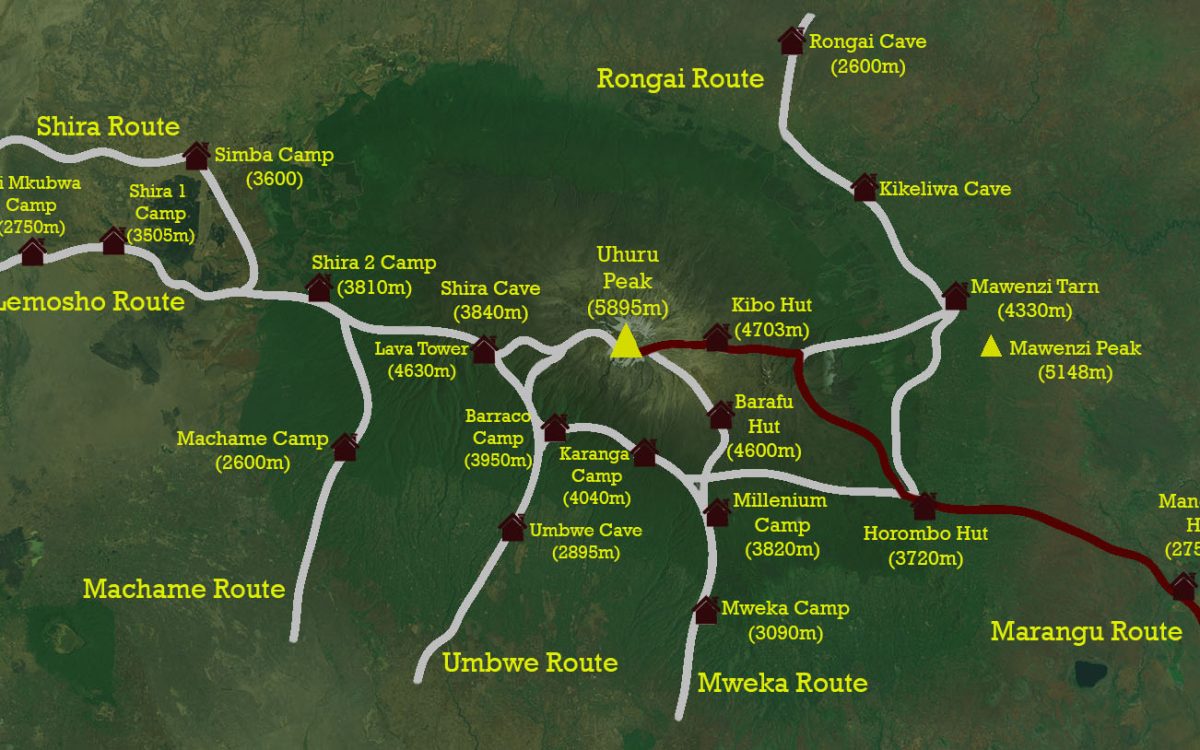
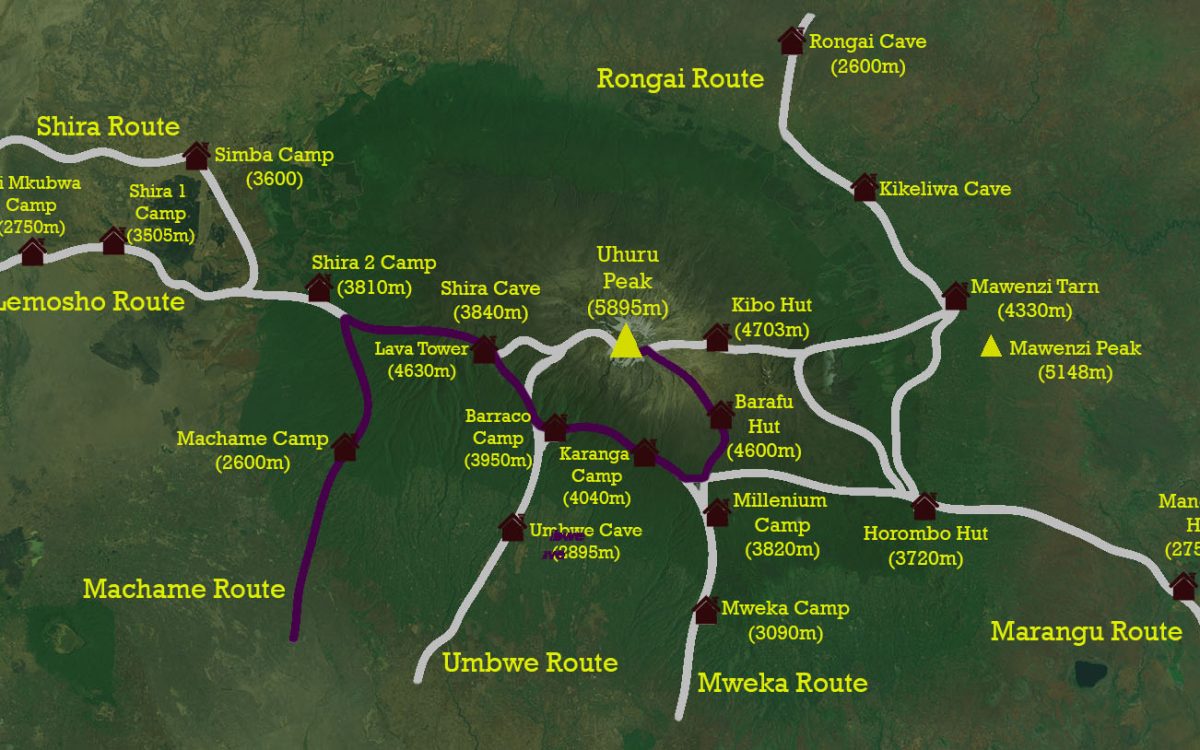
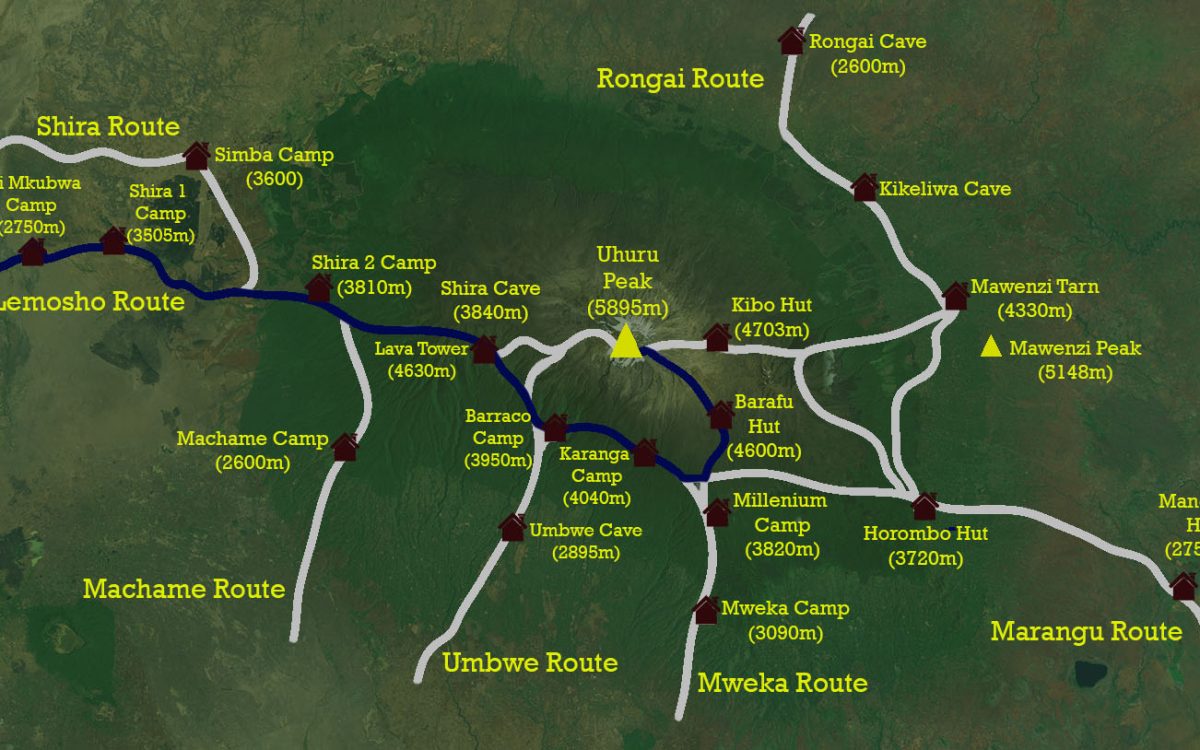
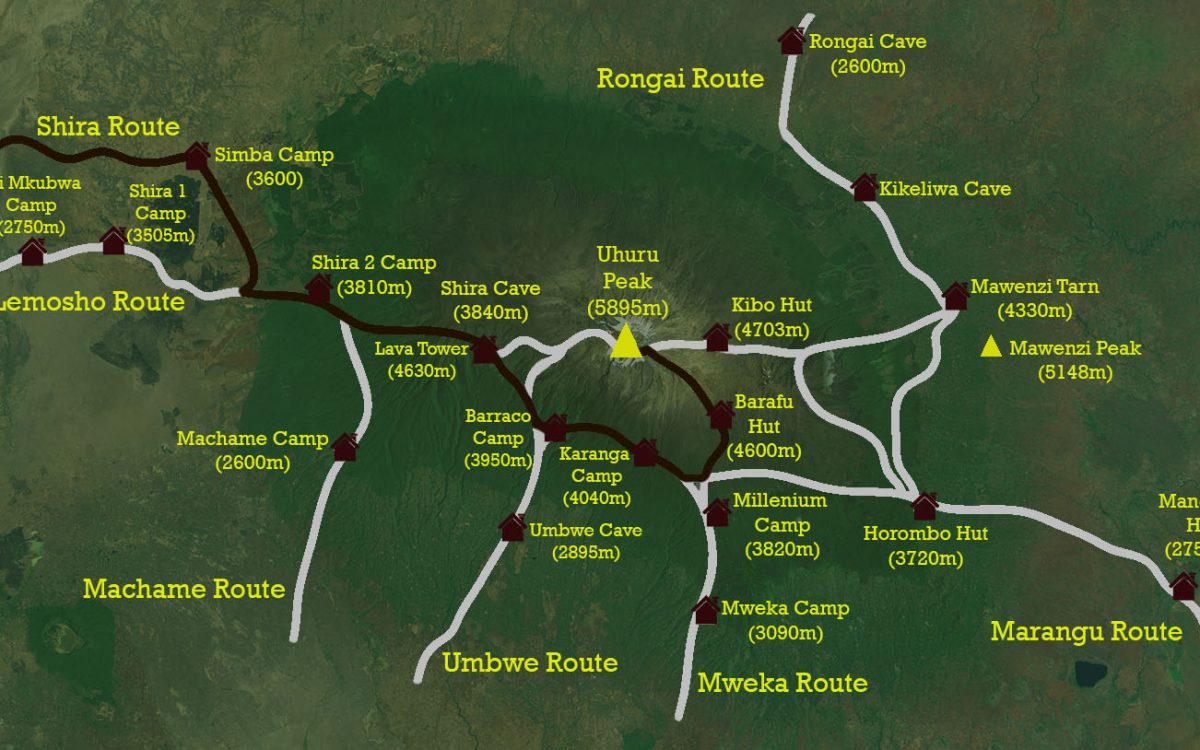
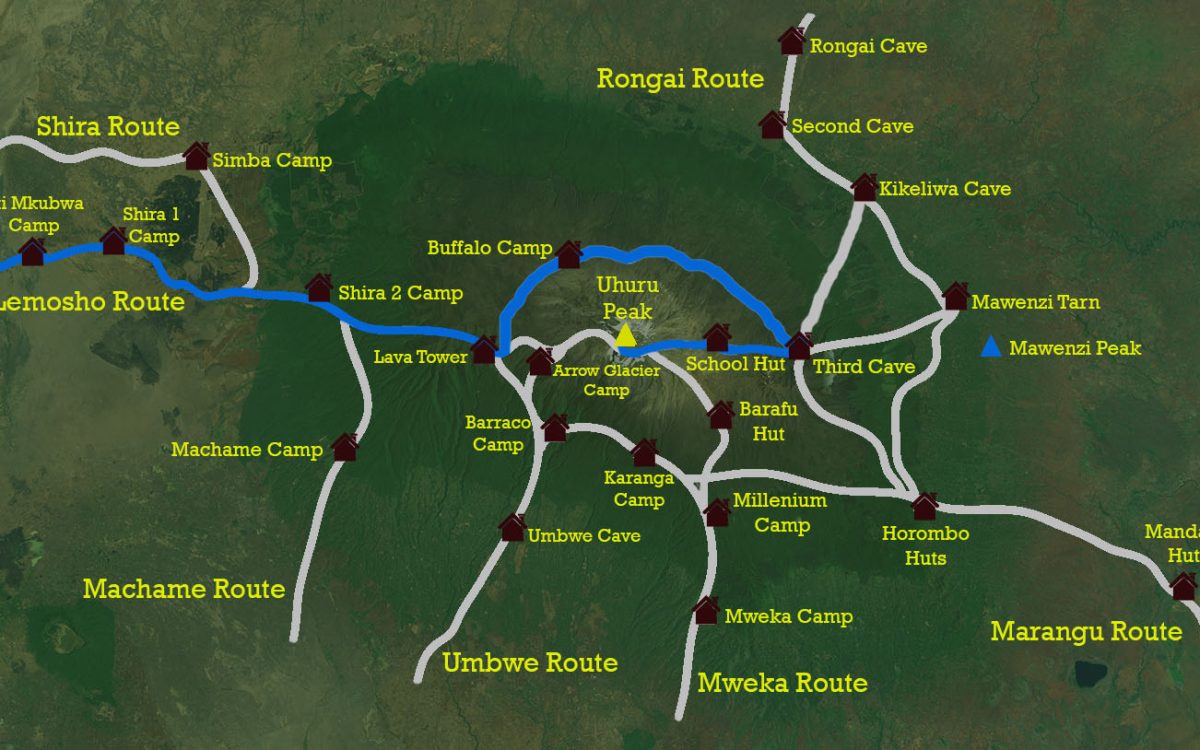
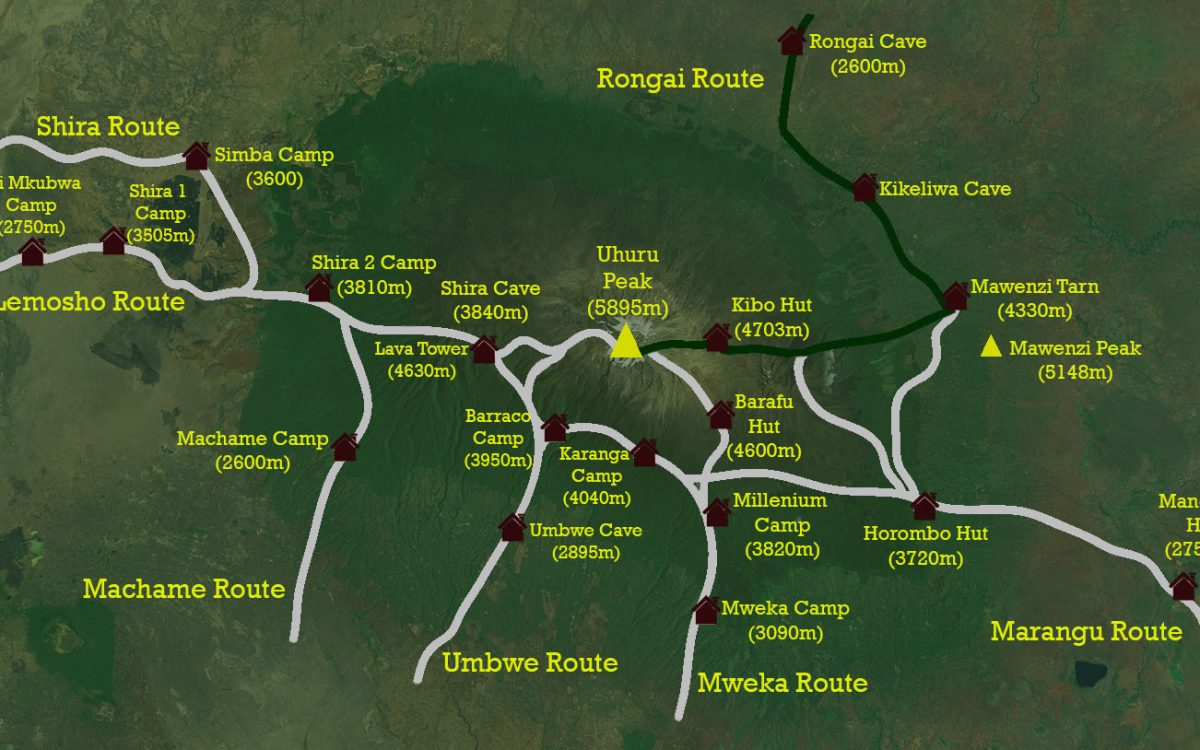
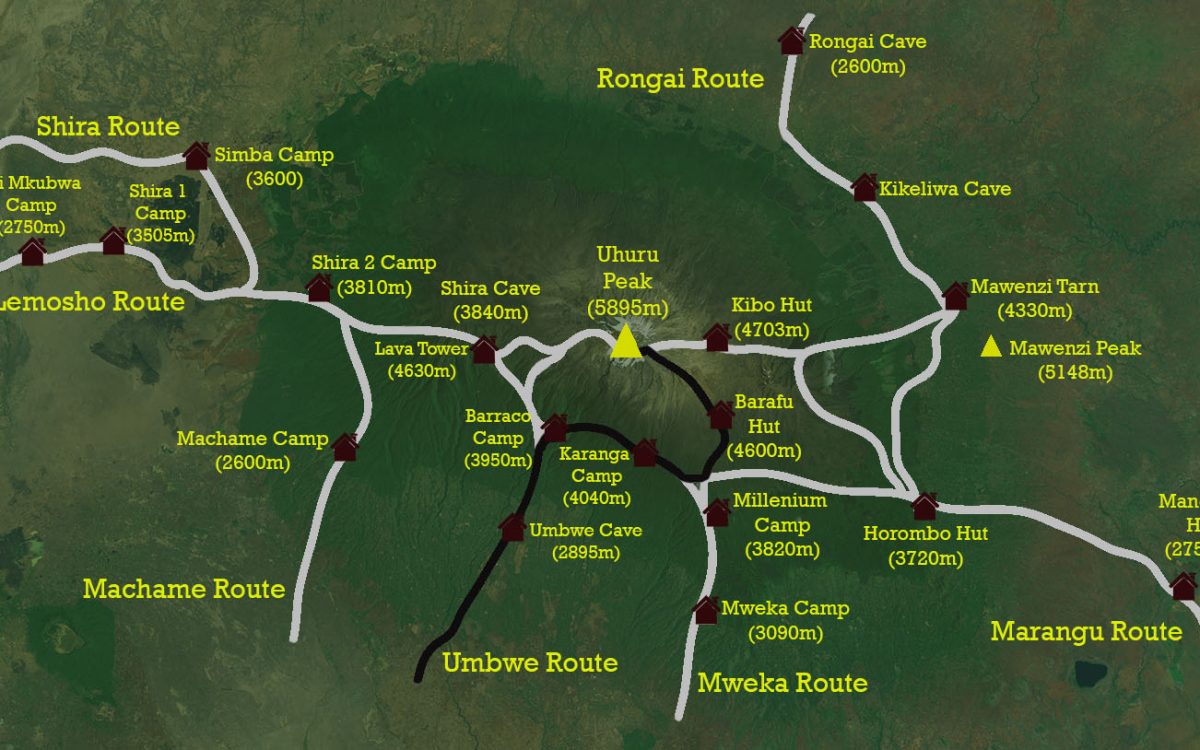
There are seven established routes to climb Mount Kilimanjaro – Marangu, Machame, Lemosho, Shira, Rongai, Northern Circuit and Umbwe. The Marangu, Machame, and Umbwe routes all approach from the south of the mountain (Mweka is used only for descent). The Lemosho, Shira and Northern Circuit routes approach from the west. The Rongai route approaches from the north. The illustrations below depict a

three-dimensional view of Kilimanjaro’s climbing routes and a close up of the approaches to the summit.

Selecting a route is a tough choice for most. To find the best Kilimanjaro route for you, considerations should be taken for the route’s scenery, difficulty, foot traffic and its altitude acclimatization characteristics, as depicted in the table below. We have assigned overall ratings to each route.

Kilimanjaro RouteMin. DaysRec. DaysDifficultySceneryTrafficRating
Northern Circuit99highexcellentvery low****
Lemosho Route68highexcellentmedium****
Rongai Route67mediumvery goodlow****
Machame Route67highexcellenthigh***
Shira Route67highexcellentmedium**
Marangu Route56mediumgoodhigh**
Umbwe Route57very highvery goodvery low**

We recommend Lemosho route, Northern circuit route,Machame route and Rongai route. We favor the best Kilimanjaro routes – those with the most favorable combination of high success rates, excellent scenery, and low foot traffic.

Marangu (“Coca Cola”) Route **

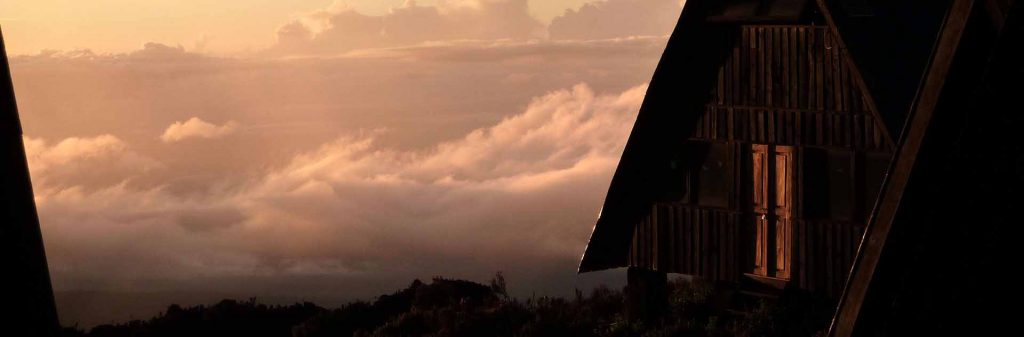
Known as the “Coca-Cola” route, the Marangu route is a classic trek on Mount Kilimanjaro. It is the oldest, most well established route. Many favor the Marangu route because it is considered to be the easiest path on the mountain, given its gradual slope. It is also the only route which offers sleeping huts in dormitory style accommodations.

The minimum days required for this route is five, although the probability of successfully reaching the top in that time period is quite low. Spending an extra acclimatization day on the mountain is highly recommended when climbing Kilimanjaro using the Marangu route.

However, despite its immense popularity, we avoid leading climbs on the Marangu route. The route has the least scenic variety of all the routes because the ascent and descent are done on the same path and it is the most crowded route for that reason. Marangu is favored only during the rainy season, where the hut accommodations are preferred over wet ground, or for those who only have five days to climb Kilimanjaro (which we do not recommend anyhow).

marangu
machame

Machame (“Whiskey”) Route ***

Known as the “Whiskey” route, the Machame route is now the most popular route on the mountain. Compared with Marangu, the days on Machame are longer and the walks are steeper. The Machame route is considered a difficult route, and is better suited for more adventurous folks and those with some hiking or backpacking experience.

The route begins from the south, then heads east, traversing underneath Kilimanjaro’s southern ice field before summiting. The minimum number of days required for this route is six days, although seven days is recommended.

The Machame route is scenically beautiful and varied. However, due to the heavy crowds, it loses some of its splendor.

Lemosho Route **** (RECOMMENDED)

The Lemosho route is one of the newer routes on Mount Kilimanjaro. The route begins in the west and rather than simply intersecting Shira Plateau (like Machame), Lemosho crosses it from Shira Ridge to Shira Camp.

Climbers encounter low traffic until the route joins the Machame route. Afterwards, Lemosho follows the same route through Lava Tower, Barranco and Barafu, known as the southern circuit.

The minimum number of days required for this route is six days, although eight days is ideal.

Lemosho is considered the most beautiful route on Kilimanjaro and grants panoramic vistas on various sides of the mountain. It is our favorite route because it offers a great balance of low traffic, scenic views and a high summit success rate. Thus, Lemosho comes highly recommended. Most of our clients use Lemosho.

lemosho
shira

Shira Route **

The Shira route is another path that approaches Kilimanjaro from the west, and it is nearly identical to the Lemosho route. In fact, Shira was the original route and Lemosho is the improved variation. While Lemosho starts at Londorossi Gate and treks through the rain forest to Shira 1 Camp, the Shira route bypasses this walk by using a vehicle to transport climbers to Shira Gate, located near the Shira Ridge.

On the first day on the mountain, climbers begin their hike from 11,800 feet (3,600 m) and spend their first night at the same elevation at Simba Camp. Then, the route merges with Lemosho and follows the southern circuit route.

Although Shira is a varied and beautiful route, Lemosho is recommended over Shira due to the relatively high altitude of Shira’s starting point, which is accessed quickly by vehicle. It is possible that climbers will experience some altitude related symptoms on the first day while camping at 11,800 feet.

Northern Circuit Route **** (RECOMMENDED)

The Northern Circuit route is the newest, most exciting route on Kilimanjaro. The trek follows the Lemosho trail in the beginning, approaching Kilimanjaro from the west. However, instead of following the southern traverse like all the other west approaching routes, the Northern Circuit traverses the mountain around the quiet, rarely visited northern slopes.

The Northern Circuit route is a nine day climb, which is the longest route in terms of time and distance travelled. The days spent at around 13,000 feet are great for acclimatization, resulting in the highest success rates for all routes on Mount Kilimanjaro.

With a high success rate, incredible varied scenery and a very low number of visitors, the Northern Circuit route is certainly one of the best routes on Kilimanjaro.

Northern circuit
rongai

Rongai Route *** (GOOD)

The Rongai route is the only route that approaches Kilimanjaro from the north, close to the Kenyan border. Though gaining popularity amongst climbers, Rongai has low traffic. It is the preferred route for those looking for an alternative to the crowded Marangu route, for those who would like a more remote hike, and for those who are climbing during the rainy season (the north side receives less precipitation).

The minimum number of days required for this route is six days, and seven days are recommended.

Although the scenery is not as varied as the western routes, Rongai makes up for this by passing through true wilderness areas for days before joining the Marangu route at Kibo camp. This route descends down the Marangu route. Rongai is a moderately difficult route, and is highly recommended, especially for those with less backpacking experience.

Umbwe Route **

The Umbwe route is a short, steep and direct route. It is considered to be very difficult and is the most challenging way up Mount Kilimanjaro. Due to the quick ascent, Umbwe does not provide the necessary stages for altitude acclimatization. Although the traffic on this route is very low, the chances of success are also low.

The route is offered at a minimum of six days, though seven days is recommended when attempting this route.

The Umbwe route should only be attempted by those who are very strong hikers and are confident in their ability to acclimatize. However, overall, the Umbwe route is not recommended and we discourage its usage for our clients.

umbwe
kili kibo top

Crater Camp

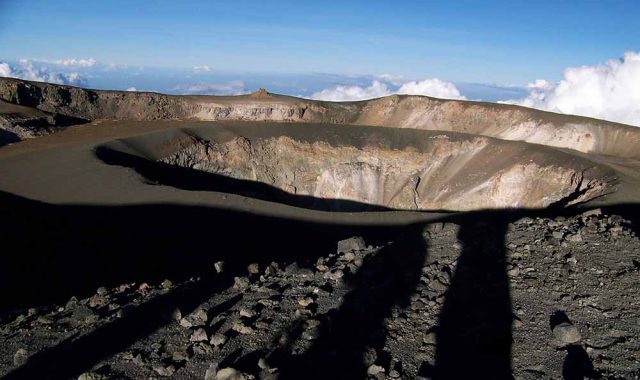
Just shy of the summit, there is a little used campsite known as Crater Camp (18,800 feet/5,750 m). It is called Crater Camp because it is a short distance from the source of Kilimanjaro herself, Reusch Crater (19,140 ft/5,800 m). Additionally, the campsite is next to one of Kilimanjaro’s last remaining glaciers, Furtwangler Glacier. Staying at Crater Camp gives climbers an opportunity to climb to the crater rim, and to get up close to the glaciers.

Crater Camp can be used the night before or preferably after a summit attempt. We operate private climbs using Crater Camp on the 9 day Lemosho route and 10 day Northern Circuit route.

meru 2 (2)

Mount Meru

Fifty miles (80 km) west of Mount Kilimanjaro lies an often overlooked, but spectacular volcano. Mount Meru is 14,980 feet (4,565 m) high, and serves as a great warm up before climbing Mount Kilimanjaro (19,341 ft/5,895 m). In fact, it is ideal for altitude acclimatization and you may elect to climb Mount Kilimanjaro with a lower number of days after climbing Meru.

On the mountain, there is a good chance of seeing wildlife, and the crowds that can be seen on Kilimanjaro are non-existent here. Many people who climb the mountains have a quiet preference for the humble Mount Meru.

Kilimanjaro Prices and costs

Kilimanjaro Prices and costs

Many people look for a cheap Kilimanjaro climb. But if you have done some research, then you have already found that this is not possible. And you probably have also discovered that there are a wide range of prices charged for climbing Mount Kilimanjaro by different outfitters. The choices may be overwhelming. The bad news is that there are not many reputable operators, and who you choose to climb with is crucial to your success and overall experience.

First and foremost, do not make your decision based on price alone. Price should be only one component of your overall decision. High altitude trekking is not the place to shop for a cheap “deal”, nor is it the place to overpay needlessly. What you are looking for is high quality service at a reasonable price.

PRICES

Please turn your phone to landscape to see the table of prices. Thank you.

All prices are per person

Routes Details Group size  
1 Climber 2 – 4 Climbers 5 + Climbers  
5 Days Marangu Route 5 days / 4 nights hike + 2 nights hotel accommodation $ 1 799 p/p $ 1 699 p/p $ 1 599 p/p
6 Days Marangu Route 6 days / 5 nights hike + 2 nights hotel accommodation $ 1 899 p/p $ 1 799 p/p $ 1 699< p/p
6 Days Machame Route 6 days / 5 nights hike + 2 nights hotel accommodation $ 2 399 p/p $ 2 200 p/p $ 1 999 p/p
7 Days Machame Route 7 days / 6 nights hike + 2 nights hotel accommodation $ 2 450 p/p $ 2 300 p/p $ 2 110 p/p
6 Days Lemosho/Rongai/Shira/Umbwe Routes 6 days / 5 nights hike + 2 nights hotel accommodation $ 2 600 p/p $ 2 410 p/p $ 2 295 p/p
7 Days Lemosho/Rongai/Shira/ Umbwe Routes 7 days / 6 nights hike + 2 nights hotel accommodation $ 2 699 p/p $ 2 500 p/p $ 2 360 p/p
8 Days Lemosho/Rongai/Shira/ Umbwe Routes 8 days / 7 nights hike + 2 nights hotel accommodation $ 2 820 p/p $ 2 599 p/p $ 2 420 p/p
9 Days Northern Circuit 9 days / 8 nights + 2 nights hotel accommodation $ 3 350 p/p $ 3 200 p/p $ 3 080 p/p
Notes:
  • On the Marangu Route, all persons will share the A frame hut accommodation that provides 8 bunk beds
  • Additional days on the mountain could be added to an extra cost of US$ 255 per day ie. Crater camp
  • Rates detailed above are per person sharing – except for the 1 person’s rate
 

Price includes the following:

  1. Airport Transfers
  2. Hotel accommodation in Arusha or Moshi – 2 Nights half board, 3 star accommodation
  3. Hotel accommodation includes storage facilities for excess luggage during hikes
  4. Return transfers between the hotel to the start / finish point of a climb
  5. All Kilimanjaro National Park gate fees, camping / hut fees and climbing permits
  6. Kilimanjaro National Park rescue fees (Kilimanjaro Rescue Team)
  7. Pulse Oximeter, used to take blood-oxygen level readings of clients twice a day
  8. Emergency oxygen (for use in emergencies only – not as summiting aid)
  9. More complete First Aid kit (compared to Standard Package – for use in emergencies only)
  10. Qualified mountain guide, assistant guides, porters and cook
  11. Guides, cooks and porters wages
  12. Breakfast, lunch and dinner, as well as hot drinks on the mountain
  13. Food of superior quality and of a bigger variety on the mountain
  14. Hot lunch is prepared at the lunch stop and served with table, chairs (and inside a mess tent in case of bad weather), except on day 1 of the hike where climbers are provided with a packed lunch. (Not applicable on the Marangu route as all meals is served at the camps in designated mess halls)
  15. Superior quality camping equipment (tents, sleeping mats, camp chairs, camp tables, mess tent & cutlery for meals) – not applicable on the Marangu route as all meals are served at the camps in designated dining halls
  16. Water for washing up daily
  17. Porter to carry your duffel bag, with maximum weight of 15kg / 32 lbs, from one camp to the next camp
  18. Kilimanjaro National Park certificate for your successful summit attempt
  19. 3 litres of mineral water (per hiker) for the first day on your climb
  20. Drinking water treated with Pure drops from night 1
  21. Portable toilet (Portable toilet not allowed on the Marangu route)
  22. The option to have a private climb at no additional charge, irrespective of the group size!

Excludes:

  1. Flights and airport taxes
  2. Items of a personal nature
  3. Compulsory tips for guides, porters and cook
  4. Entry visa for Tanzania (US$50 per passport holder for most nationalities / US $ 100 per visa for USA passport holders)
  5. Vaccination requirements (Yellow Fever – only compulsory if you travel to Tanzania via a Yellow Fever infected country, Meningitis & Hepatitis A remains optional, but recommended)
  6. Optional but highly recommended travel and medical
  7. Personal hiking/trekking gear – you could rent some of the gear in Tanzania
  8. Optional Gamow bag – subject to additional cost, depending availability and booking in advance
  9. Optional tracking service – subject to additional cost, depending availability and booking in advance
  10. Snacks, personal medicine and sports drink
  11. Meals and drinks not specified

Tipping Guidelines

Those who have climbed Mt Kilimanjaro before know that without the hard work and strength of the mountain crew, one would not be able to fully experience the magnificence of the mountain. At African Pathways we pay our crew more than the salary suggested by the Kilimanjaro National Park and Tanzania Tour Operator Association. However, many crew also heavily depend on tips to support their families. The following are recommended daily rates for the entire group to tip per staff member:

  • Senior guide – $20 – 30 / day
  • Assistant guide – $15 – 25 / day
  • Cook – $12 – 15 / day
  • Waiter – $10 – 12 /day
  • Porter – $8 – 10 / day
  • Summit porter – $12 – 15 / day
  • Toilet crew – $10 – 12 / day

In general for all Kilimanjaro routes except Marangu you will have: 1 Climber: 1 senior guide, 1 cook and 3 porters

  • Climbers: 1 senior guide, 1 assistant guide, 1 cook and 6 porters
  • Climbers: 1 senior guide, 1 assistant guide, 1 cook and 9 porters
  • Climbers: 1 senior guide, 1 assistant guide, 1 cook and 12 porters

These are estimates and actual numbers may vary depending on the needs of the group. It is ideal to have a tipping ceremony with the climbers and crew on the last day on the mountain. Ideally tips should be given to the individual crew members directly to ensure the full amount of the tip is received.

KPAP partner companies, like Africa Pathways, are leading the industry to improve working conditions for all porters on Mount Kilimanjaro.

Fighting for the fair treatment of porters is an uphill battle. There is strong resistance to change from certain local operators who have considerable power and influence over government and park regulations. In order to stop the abuse, tourists need to stop supporting the behavior, and boycott budget operators as a whole.

Africa Pathways Expeditions offers high quality climbs at a reasonable cost. At our price levels, we can satisfy all park fees, pay real wages to staff, supply adequate food and proper equipment, while still providing great service to our clients. We are adventurers at heart, and therefore we strive to make climbing Kilimanjaro affordable. We don’t believe that doing something extraordinary should break the bank.

Our Kilimanjaro Treks